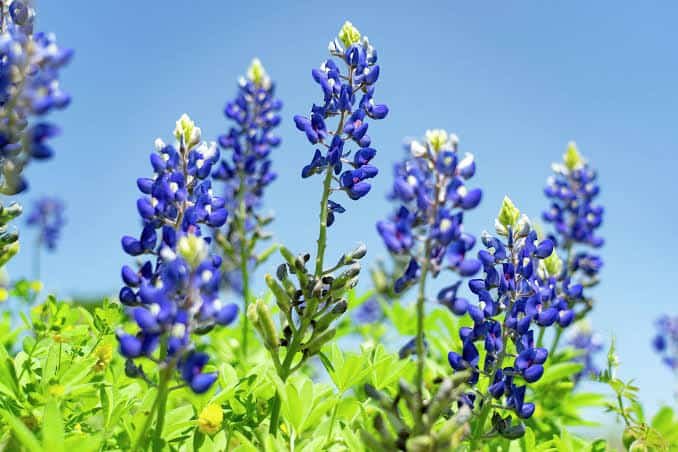
There is no Texas law that makes it illegal to pick a bluebonnet. The Texas State Law Library has publicly confirmed that its own researchers couldn’t find any statute on the topic, and the Texas Department of Public Safety issued a formal statement stating plainly that no law protects the state flower from being picked. The bluebonnet earned its “state flower” title back in 1901, but that designation has always been purely honorary, carrying no special legal protection beyond whatever rules apply to any other plant.
Where This Myth Actually Came From
The rumor isn’t entirely baseless, which is part of why it has stuck around for so long. Back in the 1930s, Texas did have a law making it unlawful to pick bluebonnets and other wildflowers on enclosed or state-mandated land without permission. That law was repealed in 1973, over fifty years ago, yet the myth has somehow outlived the actual statute by several decades.
Public conservation campaigns deserve some of the blame too. The Texas Department of Transportation has spent decades encouraging visitors not to pick or trample wildflowers, and this messaging often gets interpreted as a legal requirement rather than the polite request it actually is. When an official state agency tells you not to do something, it’s an easy leap to assume there’s a law behind it, even when there genuinely isn’t one.
Why Where You’re Standing Matters More Than the Flower Itself
Here’s the part that actually carries legal weight. Most of the bluebonnets Texans see growing wild aren’t there by accident. TxDOT has actively cultivated wildflowers along highway rights-of-way since the 1930s, seeding over 30,000 pounds of wildflower seed across more than a million acres of state property every single year specifically for this purpose.
Those flowers grow on land the state owns and actively manages, and the Texas Administrative Code prohibits destroying vegetation on that right-of-way. This means picking a small handful of bluebonnets from a highway shoulder generally won’t trigger legal trouble, but digging up large clumps, driving your vehicle into the field itself, or causing visible damage to the managed landscape crosses into a different legal category entirely.
State Parks Are a Completely Different Story
If you’re picking bluebonnets inside a Texas state park or national park, the rules change dramatically. Removing or destroying any plant within park boundaries is illegal, full stop, regardless of whether that plant happens to be the beloved state flower or an ordinary weed. This single distinction, roadside versus park property, accounts for nearly all the legitimate legal risk connected to bluebonnet picking.
Private Property Turns This Into Trespassing
Picking bluebonnets growing on someone’s ranch or private land without permission isn’t really a wildflower issue at all; it’s a trespassing issue. A Class B misdemeanor trespass conviction in Texas can carry a fine of up to $2,000, though judges typically impose fines closer to $200 to $500 for a first offense without aggravating circumstances. The flower itself is legally irrelevant here; the crime is stepping onto private land without the owner’s consent.
The Real Risk Is Usually a Traffic Citation, Not a Wildflower Charge
If you get a ticket after stopping to pick bluebonnets along a state highway, that ticket will almost certainly cite a traffic violation rather than anything related to the flower. Common citations include improperly parking on a shoulder, being a pedestrian in the roadway, or stopping on a highway for non-emergency reasons. The officer isn’t punishing you for touching a bluebonnet; they’re addressing a genuine safety concern about people wandering near active traffic.
City Ordinances Add Another Layer
Some Texas cities have their own municipal park ordinances that restrict removing vegetation from public spaces within city limits. Austin, for example, has rules against removing plants from parkland without specific authorization. These local rules vary significantly from city to city, so a quick check of local ordinances is worth it if you’re planning to gather flowers from an urban park rather than an open highway shoulder.
Practical Etiquette Worth Following Anyway
Even without a specific law against it, there are good reasons to pick sparingly. Many roadside wildflowers are annuals, meaning a plant that gets picked or trampled before it seeds simply won’t return the following spring. TxDOT actively discourages picking flowers or even walking through dense patches for photos, since doing so can damage the very blooms that make bluebonnet season so beloved statewide. Taking a small handful for your kitchen table generally causes no harm, but treating an entire field as a free-for-all does real damage to next year’s bloom.
FAQs
Q1. Can I get a ticket specifically for picking a bluebonnet on the highway shoulder?
Generally no, not for the flower itself. Any citation you might receive would typically be for an unrelated traffic violation, like improperly parking or standing in the roadway, not for touching the flower.
Q2. Is it illegal to pick bluebonnets inside a Texas state park?
Yes. Removing or destroying any vegetation within state park boundaries is illegal, regardless of which specific plant is involved.
Q3. Does it matter if the bluebonnets are on someone’s private ranch?
Yes, significantly. Picking flowers on private property without the owner’s permission can be prosecuted as criminal trespassing, entirely separate from any wildflower-specific rule.
Q4. Will TxDOT actually fine me for taking a small bouquet from a highway median?
It’s highly unlikely for a small, casual amount. Legal risk increases substantially if you dig up large clumps, damage the roadside vegetation extensively, or drive a vehicle into the planted area itself.