The Short Legal Answer
Being gay is not illegal in China. Consensual same-sex activity between adults was decriminalized in 1997, and homosexuality was formally removed from China’s official list of mental disorders in 2001. There’s no criminal statute today that punishes someone simply for being gay or engaging in consensual same-sex activity, for either men or women, and this has been the settled legal position for nearly three decades.
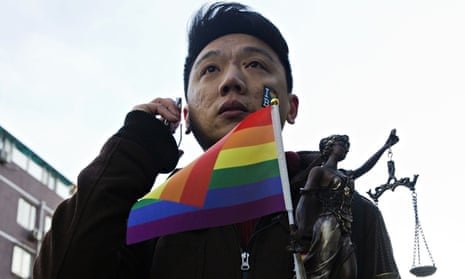
Where the Old Criminalization Actually Came From
Before 1997, China didn’t have a law that named homosexuality directly. Instead, prosecutors relied on a broad catch-all offense in the 1979 Criminal Law called “hooliganism,” which authorities used to sweep in same-sex conduct alongside a wide range of other behavior the state considered socially undesirable. When the 1997 revision of the Criminal Law removed the hooliganism provision entirely, it took the primary legal tool for prosecuting gay people along with it, which is why 1997 gets cited as the decriminalization date rather than an earlier specific repeal of an anti-gay statute.
Why “Not Illegal” Doesn’t Mean “Legally Protected”
This is genuinely the most important distinction to understand about China’s current approach. Decriminalization removed the threat of prosecution for the act itself, but it didn’t build any of the protective legal infrastructure that typically follows in other countries. There’s no legal recognition of same-sex marriage or civil partnership anywhere in mainland China. Same-sex couples cannot jointly adopt children. And until very recently, there was no clear legal mechanism addressing discrimination based on sexual orientation in employment, housing, or public life.
The 2026 Supreme People’s Court Guidance Is a Genuine Shift
This is worth flagging specifically because it’s recent and meaningfully changes the picture. Following a citizen’s petition, China’s Supreme People’s Court issued guidance in May 2026 instructing local courts to consider personal dignity protections when adjudicating cases involving LGBTQ-related discrimination. The guidance specifically found that insults directed at someone’s sexual orientation, gender identity, or gender expression can be treated as unlawful by courts, and separately affirmed that discrimination in labor and employment matters connected to sexual orientation can be judged unlawful, with courts able to order reversal of an employer’s discriminatory decision and compensation for resulting losses. This doesn’t create a formal anti-discrimination statute the way many Western countries have, but it does give LGBTQ individuals a genuine, if still developing, legal avenue they didn’t clearly have before.
Why Public Advocacy Carries Different Risk Than Private Life
Here’s where the legal picture gets genuinely more complicated than a simple “it’s legal” would suggest. China’s Criminal Law includes a provision called “picking quarrels and provoking trouble” under Article 293, and this charge has become one of the government’s most flexible tools for controlling public expression of many kinds, including journalism, general activism, and content posted online that officials find objectionable. It isn’t written to specifically target LGBTQ people, but its breadth means that organizing a public event, running an advocacy campaign, or pushing visibly for LGBTQ rights can attract the same kind of scrutiny used against dissent generally. The practical reality is that being gay privately carries no legal risk, while visibly organizing around LGBTQ rights runs into the same public-order tools used against a much broader range of activism.
What’s Happened to Digital Community Spaces Recently
Online platforms have historically been one of the main places LGBTQ communities in China found each other and organized support, given the restrictions on public gatherings and formal organizations. That space has been shrinking. In 2025, several gay dating apps were removed from the Apple App Store within China, and a number of prominent queer social media accounts were forced to either rebrand or shut down entirely. China’s Cybersecurity Law and related regulations give authorities broad grounds to restrict content deemed to “disrupt social order,” and this framework has been applied specifically to LGBTQ-related organizing, education, and community content online.
Where Hong Kong’s Legal Framework Actually Differs
It’s worth separating Hong Kong from mainland China here, since the two operate under genuinely different legal systems. Male homosexuality was legalized in Hong Kong in 1991, decades before the mainland’s 1997 change, and the age of consent was equalized in 2006. Hong Kong’s Bill of Rights Ordinance specifically protects individuals against sexual orientation discrimination by government and public authorities, a protection that doesn’t exist in the same form on the mainland. Hong Kong’s Court of Final Appeal has also ordered the government to establish a legal framework for registered same-sex partnerships, with a court-imposed deadline that passed in September 2025, reflecting a judicial branch willing to push further on this issue than mainland courts have to date.
Practical Considerations for Visitors and Residents
For anyone traveling to or living in China, the practical gap between legal status and social reality matters more day to day than the statute itself. Being openly gay isn’t a crime, but public displays of affection between same-sex couples can still draw unwanted attention or harassment, particularly outside major cities like Beijing and Shanghai, where social attitudes tend to be more conservative. Younger, urban populations show meaningfully more acceptance than older generations and rural communities, creating a genuine generational and geographic divide in how safe someone might feel being visibly out in different parts of the country.
FAQs
Q1. Can two people of the same sex be arrested simply for being in a relationship together in China?
No, private consensual same-sex relationships carry no criminal penalty anywhere in mainland China, and this has been the case since the 1997 decriminalization.
Q2. Does the 2026 Supreme People’s Court guidance mean China now has a formal anti-discrimination law for LGBTQ people?
Not exactly, it’s judicial guidance directing how courts should handle specific discrimination and dignity-related cases, which is meaningfully different from a comprehensive anti-discrimination statute, though it does give people a clearer legal path in certain disputes than existed before.
Q3. Is organizing an LGBTQ pride event or public advocacy campaign legal in mainland China?
This falls into genuinely uncertain territory, since public order laws like the “picking quarrels and provoking trouble” provision have been used to shut down or restrict LGBTQ advocacy events, even though the underlying identity itself isn’t criminalized.
Q4. Does Hong Kong’s legal treatment of LGBTQ rights apply the same way in mainland China?
No, Hong Kong operates under a separate legal system with distinct protections, including specific discrimination protections and a court-ordered path toward partnership recognition, neither of which currently exists in the same form on the mainland.