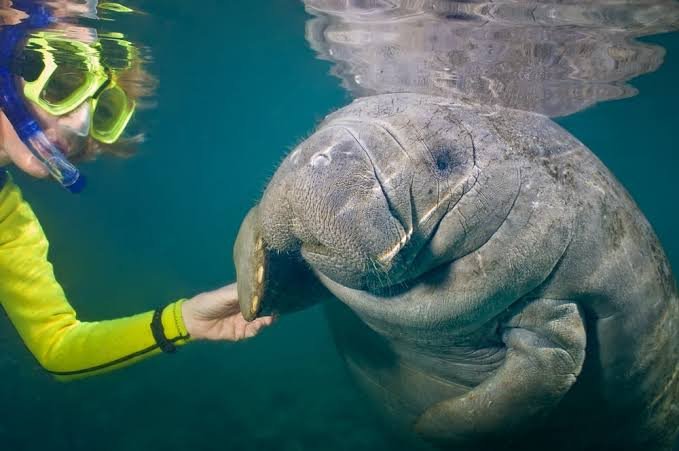
Manatees have a soft-looking, almost cartoonish charm that makes people forget they’re dealing with a federally protected animal the moment one drifts close during a Florida snorkeling trip. That instinct to reach out and touch is exactly what gets tourists fined, and sometimes arrested, every single winter in places like Crystal River and Homosassa Springs.
What the Law Actually Says
Three separate laws stack on top of each other here, and any one of them alone would already make touching a manatee illegal. The Marine Mammal Protection Act of 1972 bans “taking” any marine mammal in US waters, and “take” is defined broadly enough to cover harassing, pursuing, or disturbing the animal, not just physically harming it. The Endangered Species Act adds a second layer of protection specifically for species facing population pressure; manatees were downgraded from “endangered” to “threatened” status in 2017, but that reclassification didn’t weaken any of the underlying penalties. And Florida’s own Manatee Sanctuary Act of 1978 goes further still, declaring the entire state a sanctuary and making it unlawful to “annoy, molest, harass, or disturb” a manatee by any means.
Why Intent Doesn’t Matter Here
This is the part that catches almost everyone off guard. None of these laws care whether you meant to hurt the animal. A father who let his kids gently pet a baby manatee, genuinely believing it was a harmless, sweet moment worth photographing, still ended up facing a misdemeanor charge once the photos circulated online. The legal test isn’t whether you caused injury; it’s whether your action could reasonably disrupt the animal’s normal behavior. Reaching out to stroke a manatee’s back qualifies just as easily as chasing one across a spring, even if your hand barely made contact.
The Twist Nobody Expects: What If the Manatee Touches You?
Here’s where the law gets genuinely interesting. If a manatee swims up and brushes against you on its own, that’s not illegal, and you won’t be arrested for standing still while it happens. The obligation runs in one direction only: you can’t initiate contact, chase it, corner it, or reach out toward it, but you’re not required to somehow dodge an animal that decides to approach you first. Wildlife officers and manatee advocacy groups consistently advise the same response in this exact scenario: stay passive, keep your hands to yourself, and let the animal move on in its own time rather than turning the moment into an interaction.
Feeding and Watering Counts Just as Much as Touching
A lot of people assume the law is narrowly about physical contact, but it extends well beyond that. Offering a manatee food, or even running a hose so it can drink fresh water off a dock, is treated exactly the same as touching under Florida’s sanctuary law. This isn’t a minor technicality; manatees that get used to handouts near a particular dock or marina can actually skip their seasonal migration to warm-water refuges, which puts them at real risk of cold stress syndrome during winter, a condition that can be fatal. So what looks like a kind gesture toward a hungry-looking animal is actually one of the more actively enforced violations on the books.
Riding a Manatee Is Treated Far More Seriously
Simple touching or petting typically falls under what regulators classify as Level B harassment, the lower of two federal tiers. Riding a manatee, however, gets bumped up to Level A harassment, since it carries real potential to injure the animal, and that reclassification brings noticeably steeper penalties. A widely covered 2021 case in Citrus County involved a man identified from video footage riding a manatee; the clip went viral, authorities tracked him down, and he ended up facing federal charges. Florida’s Fish and Wildlife Conservation Commission has since flagged manatee riding as a specific enforcement priority during peak tourist season, precisely because social media exposure tends to increase prosecutions rather than deter the behavior.
What Penalties Actually Look Like
State-level first offenses under Florida’s Manatee Sanctuary Act typically carry fines up to $500 and up to 60 days in jail. Federal penalties climb considerably higher for more serious violations, reaching fines of up to $50,000 and up to a year in federal prison. Which end of that range someone actually faces depends heavily on the specific conduct involved; a brief, accidental touch during a guided snorkeling tour is handled very differently from a documented pattern of chasing, feeding, or riding manatees for a viral video.
How to Actually Enjoy a Manatee Encounter Without Breaking the Law
None of this means you need to avoid manatee tours or springs entirely. Licensed tour operators in Crystal River specifically train guests on passive observation, meaning you float quietly, keep your arms close to your body, and let curious manatees approach on their own terms if they choose to. Kicking your feet near one, reaching toward its face, or attempting to hold it in place for a photo are the specific behaviors that most commonly trigger citations, so avoiding those three actions covers the overwhelming majority of what gets tourists in trouble.
FAQs
Q: If a manatee bumps into me while I’m swimming, could I still get in trouble?
A: No, you won’t face charges for passive contact the manatee initiates on its own. The law targets your actions toward the animal, not an animal’s actions toward you.
Q: Is it illegal to give a manatee fresh water from a hose if it looks thirsty?
A: Yes, offering water is treated the same as feeding under Florida’s sanctuary law, since both can disrupt a manatee’s natural migration patterns and put it at risk during colder months.
Q: Can I be arrested just for swimming near a manatee without touching it?
A: Generally no, simply swimming or snorkeling in the same area isn’t illegal on its own. The violation specifically requires an action like touching, chasing, or cornering that could disrupt the animal’s normal behavior.
Q: Does it matter if I only touched a manatee for a second to take a photo?
A: No, duration doesn’t change the legal analysis. Even brief contact can qualify as harassment under federal and state law, and enforcement has actually increased in cases where the touching was documented and shared online.