Nearly Every Foot of Track Belongs to Someone
Here’s the fact that surprises most people who assume train tracks are some kind of public thoroughfare: railroad tracks and the land immediately surrounding them are private property, almost always owned by the railroad company operating that line. Even Amtrak, the name most Americans associate with passenger rail, only directly owns one specific stretch, the Northeast Corridor running between Washington D.C. and Boston. Every other Amtrak route operates through leasing agreements with private railroad companies that actually own the physical tracks. This ownership structure is exactly why walking onto tracks anywhere outside a designated crossing counts as trespassing on someone else’s property, not simply using open space.
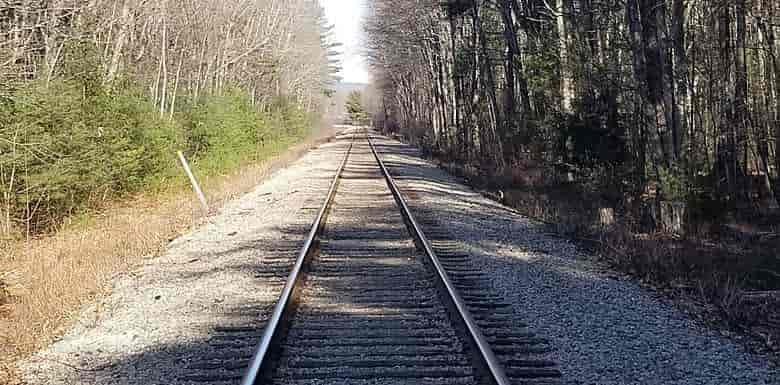
The One Legal Way to Cross
Federal guidance from the Railroad Administration is direct about this: accessing railroad property anywhere other than a designated pedestrian or roadway crossing is illegal. That’s the entire legal test in practice. A marked crossing, with signals, gates, or a clearly designated pedestrian path, is where crossing is permitted. Everywhere else along that same line, the tracks themselves and the surrounding right-of-way are off-limits regardless of how empty or unused a particular stretch might look.
Why the Danger Zone Extends Well Beyond the Rails Themselves
A common assumption is that only the actual metal rails and the space directly between them count as restricted. That’s not accurate. Railroad companies typically own a meaningful strip of land extending out from the tracks on either side, and a reasonable rule of thumb is treating anything within roughly 25 feet of the tracks as land you shouldn’t be walking on without authorization. This buffer exists for a practical reason; trains and their cargo can extend beyond the rail line itself, and maintaining a genuine safety margin requires more than just staying off the rails.
What Actually Counts as Trespassing Under These Laws
The behavior that triggers a trespassing charge is broader than most people expect. Walking across tracks at an unofficial crossing point, jogging or walking along the rails as a route between two destinations, photography sessions set up directly on or near the tracks, hunting, bicycling, and even operating recreational off-highway vehicles along the right-of-way all fall under the same prohibition. That last category carries an added consequence worth knowing about; riding vehicles along the tracks damages the ballast, the layer of rock and soil that physically supports the ties and rails, meaning this isn’t purely a personal safety issue but one that affects the track’s structural integrity itself.
How State Penalties Actually Differ
Once you get past the general federal framework, the specific consequences shift considerably depending on which state you’re in. California treats a first-offense railroad trespass with a fine reaching up to $500. Texas takes a noticeably harder line, with fines reaching up to $2,000 and the possibility of jail time attached. New York classifies this specifically as a misdemeanor under its penal code, carrying both potential fines and jail exposure. Some states lean toward alternative penalties rather than pure fines; certain jurisdictions require offenders to complete community service or attend a dedicated railroad safety training course rather than simply paying a citation.
Why This Rarely Means Jail Time on a First Offense
Despite the criminal classification, actual jail time for a straightforward first-time trespass is genuinely uncommon across most states. Enforcement tends to escalate meaningfully when specific aggravating factors are present: the trespass happened near active, moving trains, involved multiple people together rather than a single individual, resulted in property damage, or interfered with actual railway operations in some way. Repeat violations after a documented prior citation are treated considerably more seriously than someone’s first encounter with a citation for the same behavior.
The Narrow List of People Who Are Actually Exempt
State trespass statutes governing railroad property consistently carve out a specific, limited set of exceptions rather than applying the prohibition to absolutely everyone. Railroad employees and authorized contractors performing maintenance or inspection work are permitted on the property as part of their job. Passengers boarding, riding, or disembarking from a train aren’t trespassing simply by being present on railroad property in that specific context. People crossing at legitimate farm crossings, and government representatives performing official duties, also fall outside the general prohibition. Someone entering railroad property specifically to protect human life, say, pulling someone away from danger, is typically exempted as well, recognizing that emergency intervention shouldn’t itself become a separate legal violation.
Why Some States Give Railroads Their Own Enforcement Power
A detail that surprises people: several states grant railroad companies the authority to employ special constables with actual arrest powers specifically for offenses like trespassing and vagrancy occurring on railroad property. This means enforcement of these laws doesn’t always wait for a local police officer to happen by; some railroad companies maintain their own dedicated enforcement personnel with legal authority to act directly when they encounter someone trespassing on their tracks or right-of-way.
Why “No Trespassing” Signs Matter Even Without Reading the Actual Statute
Most railroad companies post explicit No Trespassing signage along their property specifically because it reinforces the legal reality and removes any ambiguity for someone who might otherwise assume unposted, seemingly abandoned-looking tracks are fair game. Encountering one of these signs is a direct, unmistakable signal that the specific stretch of track you’re looking at is private property under active legal protection, regardless of how quiet, overgrown, or infrequently used that particular section might appear.
FAQs
Q: If a section of railroad track looks abandoned and clearly hasn’t been used in years, is it still illegal to walk on it?
A: Generally yes, since ownership and trespass restrictions don’t automatically disappear just because a line appears inactive; the property remains privately owned unless it’s been formally abandoned and released by the railroad company, which is a specific legal process rather than something determined by appearance alone.
Q: Can I be charged with trespassing just for taking photographs near railroad tracks without actually stepping onto them?
A: It depends on exactly where you’re standing, since the restricted right-of-way typically extends beyond the rails themselves, meaning photography from within that buffer zone can still constitute trespassing even if you never touch the actual tracks.
Q: Does walking along tracks to reach a legitimate destination, like cutting through to get home faster, count as an exception?
A: No, using tracks as a shortcut between two points is specifically identified as one of the most common forms of railroad trespassing, and convenience or practical necessity doesn’t create a legal exception under these laws.
Q: If I’m walking near tracks and pull someone away from danger, could I still be charged with trespassing for that specific intervention?
A: Generally no, most state statutes specifically exempt someone entering railroad property to protect human life, recognizing that genuine emergency intervention shouldn’t itself trigger a separate trespassing violation.