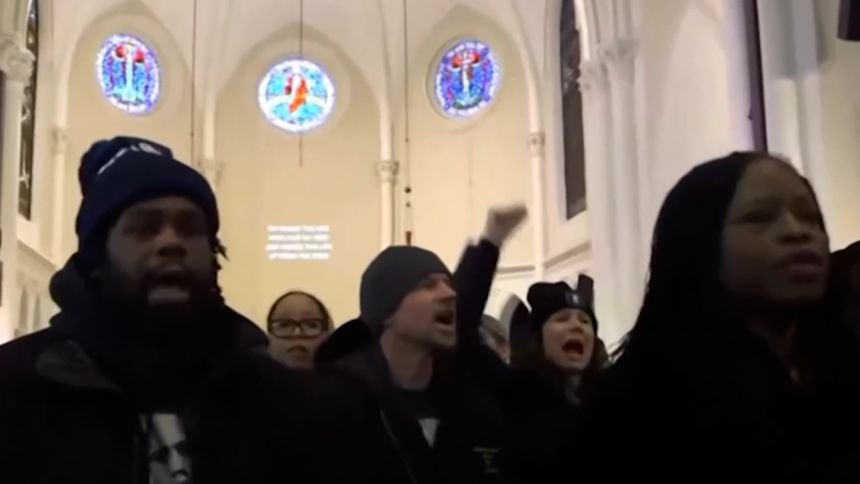
On January 18, 2026, roughly three dozen people walked into a Sunday morning service at Cities Church in St. Paul, Minnesota, chanting as they moved through the aisles. Within days, attorneys general were weighing in, a national church insurance provider was issuing guidance to pastors across the country, and a handful of state legislatures started drafting new bills. All of that fallout traces back to one legal question most people have never had to think about: does the First Amendment let you protest inside a place of worship the same way it lets you protest on a public sidewalk?
Private Property Doesn’t Become Public Just Because the Doors Are Open
This is the single fact that resolves most of the confusion here. A church holding a Sunday service and welcoming the public inside is still private property, in exactly the same legal sense as a restaurant or a retail store welcoming customers. Courts have addressed this directly; a Connecticut appellate decision put it plainly, stating that property doesn’t lose its private character merely because the public is generally invited to use it for a designated purpose. Speech that’s fully protected on a public sidewalk outside a church building doesn’t carry that same protection once you’re standing inside the sanctuary.
Where the Legal Line Actually Sits
Simply attending a service you weren’t personally invited to isn’t automatically a crime, since churches typically welcome visitors without requiring individual invitations. The legal problem starts with conduct, not presence. Courts and church-law experts generally point to a consistent set of actions that cross from protected expression into unlawful territory: interrupting the service itself, chanting or shouting during prayer or preaching, blocking aisles or exits, refusing to leave once church leadership asks you to go, or attempting to approach the pulpit or seize a microphone. At that point, what started as political expression becomes a straightforward trespassing or disorderly conduct matter.
Why Refusing to Leave Is the Real Trigger Point
Church leaders retain the same authority any private property owner has: the right to withdraw an invitation and ask someone to leave. Once that request is made clearly, staying put converts the situation from a disputed gray area into a much cleaner trespass case. Attorneys who advise congregations on this specific issue note that courts evaluate trespass largely by asking whether the property owner consented to a person’s continued presence; once consent is withdrawn and communicated, remaining inside no longer has legal cover, regardless of how peaceful someone’s conduct otherwise is.
The Federal Law Now Sitting Alongside State Trespass Statutes
Beyond ordinary state trespass and disorderly conduct law, there’s a specific federal statute that applies directly to houses of worship: the Freedom of Access to Clinic Entrances Act, commonly called the FACE Act. Most people associate this law with protecting access to reproductive health clinics, but its text also protects people lawfully exercising their First Amendment rights at a place of religious worship. The law targets force, threats, or physical obstruction intended to injure, intimidate, or interfere with that religious exercise. Following the St. Paul incident, federal prosecutors opened an investigation specifically examining whether the protesters’ conduct met this threshold, and the statute’s criminal provisions have been applied in other circuit court decisions covering interference with worship services more broadly.
Why Mere Observation Doesn’t Meet the Legal Bar
It’s worth being precise about what the FACE Act actually requires, since it’s easy to overstate. The law demands proof of force, threat, or physical obstruction specifically intended to injure, intimidate, or interfere with worship. Someone quietly observing a service, or a journalist reporting on what happened, isn’t likely to meet that standard just by being present, even if their presence is unwelcome to some in the congregation. The statute targets active disruption and intimidation, not simple attendance or documentation.
What This Means for Journalists Covering These Incidents
A related nuance worth understanding: journalists have no special legal immunity from generally applicable trespass or disruption laws simply because they’re reporting on a story. If a prosecutor can establish the elements of a trespass or FACE Act violation against someone, the fact that they’re a member of the press doesn’t function as a First Amendment defense on its own. Media presence covering an event doesn’t transform a private sanctuary into a public forum either, meaning the underlying legal analysis stays the same regardless of who’s doing the entering.
Why Some Services Actually Do Happen in Genuinely Public Spaces
There’s a real exception worth knowing about, since not every religious gathering takes place on private church property. A congregation might rent a public park’s amphitheater for a service, or a student religious group might hold worship in a public university lecture hall. When a service takes place in a space that’s genuinely public, the analysis shifts, since public forums generally carry stronger speech protections than private property does, even during a religious gathering happening there. This distinction matters considerably; the same protest conduct that would clearly be trespass inside a privately owned sanctuary sits on much shakier ground legally, from the government’s side, when it happens in a rented public venue.
Why States Are Now Writing New Laws Specifically on This
Following the January 2026 incident, several state legislatures moved quickly to introduce dedicated legislation addressing church disruption specifically. Louisiana’s Senate Judiciary Committee advanced two separate bills aimed at criminalizing disruptive protests in and around churches, adding a more explicit, targeted layer on top of existing general trespass and disorderly conduct statutes. Free speech advocates have pushed back on some of these proposals, arguing that overly broad language risks sweeping in genuinely peaceful expression along with actual disruption, a tension that’s likely to keep playing out as more states consider similar bills.
Why Churches Aren’t Legally Powerless in the Meantime
Church leaders don’t need to wait for new legislation to protect their services under current law. They can issue a formal written no-trespass notice to specific individuals, coordinate with local law enforcement ahead of services when disruption seems likely, and rely on existing state trespass and disorderly conduct statutes alongside the federal FACE Act. Civil remedies are available too; a church can pursue a civil claim for trespass against protesters whose conduct crosses the line, entirely separate from whatever criminal charges a prosecutor might pursue.
FAQs
Q: Can I be arrested just for walking into a church service I wasn’t personally invited to attend?
A: Not automatically, since churches generally welcome the public to attend services without requiring individual invitations; the legal risk arises specifically from disruptive conduct or refusing to leave once asked, not from simple unannounced attendance.
Q: Does silently holding a sign inside a church during a service count as illegal disruption?
A: This falls into a genuinely fact-specific gray area, since courts focus on whether conduct actually interferes with worship or intimidates congregants; a silent, non-disruptive presence is treated very differently from chanting, blocking aisles, or refusing to leave.
Q: If a religious service is held in a public park rather than inside a church building, do protesters have stronger rights there?
A: Generally yes, since public forums carry broader speech protections than private property, meaning the same protest conduct might be treated more leniently in a public park setting than inside a privately owned sanctuary.
Q: Can a church legally have someone physically removed from a service without calling the police first?
A: Generally yes, church leaders can ask someone to leave and use reasonable means to have them removed since the building is private property, though coordinating with law enforcement beforehand is commonly recommended specifically to avoid escalation and ensure the response stays within legal bounds.