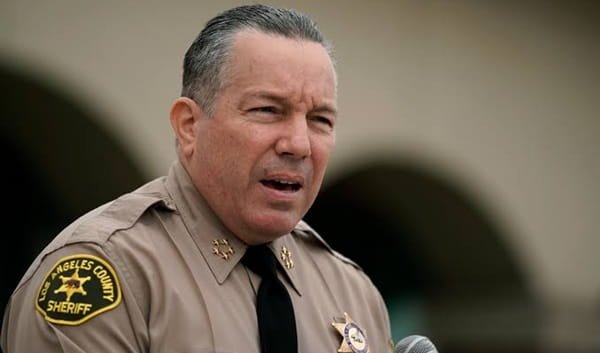
Jim Arnott’s resignation as sheriff of Greene County, Missouri, ended nearly two decades of elected leadership and more than 37 years with the county’s law enforcement agency. The departure, effective August 18, 2026, followed his appointment to a federal position rather than a sudden political dispute or an announced disciplinary finding. President Donald Trump had nominated Arnott to serve as U.S. marshal for the Western District of Missouri, and the U.S. Senate confirmed him on August 7. That confirmation set in motion a transfer of responsibilities at one of southwest Missouri’s most prominent law enforcement offices.
The Greene County Commission accepted the resignation and appointed veteran sheriff’s office captain Jason Johnson as interim sheriff. The change raised practical questions about who would oversee deputies, jail operations and existing agreements with federal agencies during the transition. It also marked the first time since 2008 that the county had a new leader in the sheriff’s office.

Why Did Sheriff Jim Arnott Resign?
Arnott left to accept the U.S. marshal appointment. His nomination became public in March 2026, allowing the county time to prepare for his departure while the Senate considered his confirmation. He continued as sheriff during that process, then resigned after approval of the federal post.
The Western District of Missouri covers a wide federal judicial area. U.S. marshals and their deputies carry out duties that include federal court security, transporting prisoners, executing federal warrants and supporting fugitive investigations. Although a county sheriff and a U.S. marshal both perform law enforcement functions, they operate under different legal authorities. The marshal is part of the federal Justice Department, while the sheriff serves a locally elected county office.
Arnott’s Career as Greene County Sheriff
Arnott first won election as Greene County sheriff in November 2008 and subsequently won reelection in 2012, 2016, 2020 and 2024. Before becoming sheriff, he had already spent many years in the department, giving him experience across local policing and county administration. By the time he left, his service totaled more than 37 years.
His tenure included oversight of patrol work, criminal investigations, jail management and public safety partnerships. As an elected sheriff, he also had to balance operational decisions with county budgets, staffing concerns and scrutiny from residents. Longevity in office does not settle debates over every policy, but it helps explain why the succession attracted attention beyond Greene County.
Who Replaced Jim Arnott?
The Greene County Commission selected Captain Jason Johnson, a longtime employee of the sheriff’s office, as interim sheriff. Johnson was the sole applicant in the commission’s selection process, and he took over when Arnott’s resignation became effective. Reports at the time said Johnson had worked for the agency for approximately 29 years.
The appointment was designed to avoid a gap in leadership. Deputies remained responsible for law enforcement functions while the interim sheriff assumed executive authority. Johnson was appointed to serve through December 31, 2026, with the county sheriff position also scheduled for the November general election. An interim appointment and an elected term are distinct: the appointment fills an immediate vacancy, while a subsequent election determines the officeholder under the regular electoral process.
What Happened to the County’s ICE Detention Agreement?
An important question surrounding the transition concerned Greene County’s arrangement to house people detained by U.S. Immigration and Customs Enforcement. Arnott defended the county jail’s involvement, arguing publicly that the federal arrangement served operational and financial purposes. Critics of immigration detention practices may view such agreements differently, but the resignation itself was not reported as a termination of the arrangement.
Johnson said in August that the sheriff’s office would continue honoring valid immigration detainers and the existing agreement with federal authorities. That was an expressed policy intention at the time of his appointment, not a blanket statement that every detention or immigration action was automatically lawful. Individual detention decisions remain subject to federal and state legal requirements.
How the Sheriff Transition Affects Greene County
The leadership change did not remove the county’s obligation to provide routine law enforcement services, maintain jail operations or respond to emergencies. Those duties continue regardless of who occupies the sheriff’s office. The interim sheriff also inherited personnel decisions, relationships with local police departments and the need to administer the county budget.
For Arnott, the move represented a transition from long-term county service to a federal appointment. For Greene County, it tested whether a leadership succession planned months in advance could preserve continuity. The verified reason for his departure is his U.S. marshal appointment; reports establishing the resignation do not support suggestions that he was forced out for misconduct.
The commission’s authority to appoint an interim sheriff is significant because the vacancy arose during an elected term, not at a normal change of administration. Local voters had most recently reelected Arnott in 2024. A temporary appointment was therefore a bridge between an unexpectedly vacant office and the next electoral decision, rather than an attempt to discard the county’s regular election process. That makes the formal dates especially important: Arnott was confirmed federally on August 7, resigned August 18 and Johnson assumed day-to-day county leadership. The documents describe a planned transition, not a sheriff removed by court order or recalled by voters.