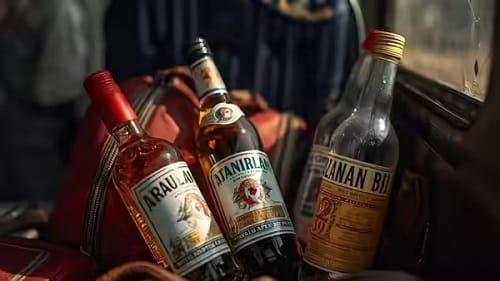
Carrying alcohol on Indian trains is one of the most confusing areas of travel law for Indian passengers. There is no single national rule — the answer depends on which states your train passes through, the Railway Act’s own provisions, and whether you are carrying or consuming. The simplest summary: consumption of alcohol anywhere on railway premises (trains or stations) is strictly prohibited everywhere. Carrying sealed alcohol for personal use is technically in a grey zone under railway regulations but is tolerated in practice on trains between non-dry states, provided it stays within state excise limits and remains sealed and concealed.
The Railway Act, 1989: The Primary Legal Framework
Section 145 of the Railways Act, 1989 is the key provision. It states that any person found in railway premises or a railway carriage who is consuming any intoxicating substance, or is in a state of intoxication and tries to create a nuisance or disturb other passengers, shall have their ticket or pass cancelled and may be punished with imprisonment up to 6 months or a fine up to Rs 500. This section clearly prohibits consumption of alcohol on trains and at railway stations — not merely being intoxicated, but the act of consuming.
Section 165 of the Railways Act empowers railway officials (including RPF and GRP) to search and detain persons suspected of carrying prohibited or dangerous goods. This provides the legal basis for railway officials to inspect luggage and confiscate alcohol found being consumed or carried in violation of excise limits.
The official Railway administration position, per Northern Railway CPRO statements, is that carrying alcohol bottles while travelling is not permitted. This position is stricter than what state excise laws technically allow, and reflects the Railway’s preference for a conservative, family-friendly environment across its public transport network.
State Excise Laws: The Varying Framework
Alcohol regulation is a State List subject under the Indian Constitution — each state makes its own rules. This creates significant complexity for inter-state rail travel. Dry states where alcohol is completely prohibited — no possession, transport, or consumption under any circumstances: Gujarat (under the Gujarat Prohibition Act), Bihar (total prohibition since 2016), Nagaland, and Lakshadweep. If your train enters or terminates in any of these states with alcohol in your luggage, you are liable under that state’s excise laws regardless of where you boarded. Penalties range from fines to imprisonment under state Prohibition Acts.
In most other states, individuals may carry limited quantities of alcohol for personal use within state-prescribed limits. General guidance from various state excise rules: typically 1.5-2 litres of sealed alcohol for personal use. Some sources cite Maharashtra allowing up to 12 units (approximately 9 litres of beer or 2 bottles of 750ml spirits). The key requirements where carrying is technically tolerated: the alcohol must be sealed (original factory seal intact); kept in luggage, not displayed; carried in quantities within state excise personal use limits; accompanied by a purchase receipt ideally; and absolutely not consumed on the train or at the station.
The Cross-State Problem
The most legally fraught situation arises when a train passes through or terminates in a dry state. A passenger boarding in Maharashtra (where alcohol is legal) with two bottles of foreign liquor becomes a criminal under Gujarat Prohibition Act the moment the train crosses into Gujarat. The possession is illegal from that point regardless of the legality at origin. Railway Police (GRP) at stations in dry states actively check luggage for alcohol, and violation of the state Prohibition Act carries serious penalties.
The practical advice: if your journey terminates in or passes through Gujarat, Bihar, Nagaland, or Lakshadweep, do not carry any alcohol regardless of what is technically permitted in your starting state.
A common question: Can I bring alcohol from Goa on a train? Goa’s Excise Department permits a maximum of two 750ml bottles for personal use when leaving the state. Beyond this limit, or without a purchase receipt, you risk seizure at the destination state. If the destination is a dry state, even two bottles make you liable.
Penalties for Violations
Under Section 145 of the Railways Act: cancellation of ticket/pass and up to 6 months imprisonment or fine up to Rs 500 (for consumption or public intoxication). Under Section 165 of the Railways Act: search, detention, and hand-over to GRP for violations of state excise laws. Under state Prohibition Acts (in dry states): Bihar Prohibition Act penalties include up to 10 years imprisonment for possession; Gujarat Prohibition Act also carries serious imprisonment terms. State excise violation for carrying beyond the personal use limit in a non-dry state: confiscation of excess alcohol and potential prosecution under the state Excise Act.
Luxury Trains: A Partial Exception
A small number of premium luxury trains — including the Maharajas’ Express and Palace on Wheels — do serve alcohol as part of their onboard dining packages. This is specifically licensed and operated by the catering service with state and railway permissions, and is not applicable to ordinary Indian Railways services. The vast majority of trains (all ordinary, superfast, express, Rajdhani, Duronto, Shatabdi, Vande Bharat services) operate under the standard Railway Act provisions with no onboard alcohol service.
Final Thought
The clearest rules for carrying alcohol on Indian trains: never consume it anywhere on railway premises — train, station, platform, or waiting room; never carry it into or through dry states (Gujarat, Bihar, Nagaland, Lakshadweep); keep bottles sealed and concealed if carrying in inter-state non-dry-state journeys; stay within state excise personal use limits (typically 1.5-2 litres); keep your purchase receipt; and be aware that Railway officials take a conservative approach and may confiscate even technically permitted quantities if displayed or creating any public order issue. The safest approach for hassle-free train travel: simply do not carry alcohol.
Frequently Asked Questions (FAQs)
Q1. Can I carry a sealed bottle of whisky/rum in my bag on a train?
In strictly literal terms: the Railway Act’s official position is that carrying alcohol is not permitted. In practice: carrying sealed bottles of alcohol in luggage (not displayed, not consumed) on trains operating between non-dry states is widely done and is not typically enforced. However, there is no absolute legal protection — a strict railway official or GRP officer could invoke Section 165 of the Railways Act. Keep within state excise personal use limits (1.5-2 litres typically), keep bottles sealed and in your bag, carry the purchase receipt, and never enter a dry state with alcohol.
Q2. What happens if I’m caught drinking on a train?
Under Section 145 of the Railways Act, 1989: your ticket can be cancelled and you face imprisonment up to 6 months or a fine up to Rs 500. In practice, GRP officers typically ask the person to stop, issue a warning, may confiscate the alcohol, and in cases of public disturbance can remove the passenger from the train at the next station. Repeat offenders or those creating disturbances face more serious consequences. Railway Police have wide powers to ensure the safety and comfort of all passengers.
Q3. I’m travelling from Goa to Mumbai — can I carry feni/local alcohol?
Yes, within limits. Goa allows export of up to two 750ml bottles per person for personal use. For a Goa-Mumbai journey (both non-dry states): two sealed bottles in your luggage, with purchase receipt, is generally acceptable. Keep them sealed, in your bag, and do not consume on the train. If your journey continued to a dry state, you would need to offload the alcohol before crossing the border.
Q4. Can alcohol be found in train pantry cars or the food service?
On standard Indian Railways trains, no. Alcohol is not sold or served in pantry cars or by onboard catering on any regular Indian Railways service. Only a handful of specially licenced premium luxury tourist trains (Maharajas’ Express, Palace on Wheels) operate with licensed bar services as part of their premium packages.
Q5. What are the dry states in India and can I carry any alcohol through them?
Complete prohibition states where carrying any alcohol is illegal: Gujarat, Bihar, Nagaland, and Lakshadweep. Mizoram had prohibition but has partially relaxed restrictions in some districts. Additionally, certain districts in other states may be declared dry for specific periods. If your train route passes through or terminates in these states, you must not carry any alcohol. The offence is committed when you enter the state with alcohol, regardless of where you purchased it or where you boarded the train. State GRP at major junctions in dry states (like Surat, Vadodara in Gujarat; Patna in Bihar) actively check for alcohol.