Recording in public spaces — whether filming crowds, street interactions, or specific individuals — is one of the most common activities of the smartphone era and one of the most legally nuanced. India’s courts and laws draw an important distinction between filming in public spaces generally (usually legal) and targeting specific individuals in ways that violate their reasonable expectation of privacy (potentially illegal). Understanding this distinction is essential for content creators, journalists, activists, and ordinary citizens.
The General Rule: Filming in Public Is Legal
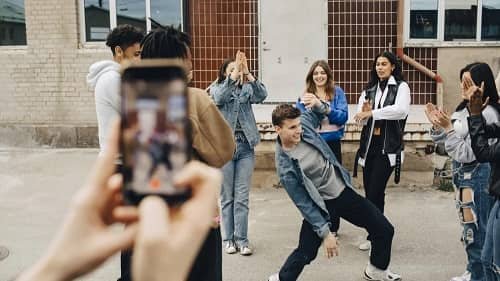
There is no general law in India that prohibits filming, photographing, or recording in public places. Public spaces — streets, parks, markets, public events, protests, government buildings’ exteriors — are by definition spaces where individuals have limited expectations of privacy. When you attend a public event or walk down a street, you accept that you may be observed, photographed, or filmed by others.
Article 19(1)(a) of the Constitution protects freedom of speech and expression, which includes the right to gather and disseminate information through recording. Journalism, street photography, documentary filmmaking, social media content creation, and everyday casual photography are all protected activities in public spaces.
The Supreme Court’s 2017 Privacy judgment (K.S. Puttaswamy) clarified that privacy is contextual. The expectation of privacy is diminished in public spaces compared to private ones. Public activities of ordinary individuals in public spaces generally do not attract privacy protection.
When Recording Becomes Illegal: Privacy Violations
The law becomes restrictive when recording is directed at individuals in ways that violate their reasonable expectation of privacy, even if they are technically in a public location. BNS Section 77 (Voyeurism): Captures the most serious category — recording a woman in circumstances where she would expect privacy, including under or through clothing, or in spaces where intimate acts occur. Penalties: 1-3 years imprisonment and fine for first offence; 3-7 years for subsequent offences. This covers not just bathrooms and changing rooms (obvious cases) but also situations like recording under a woman’s clothing in a public space (upskirting) or recording intimate acts in semi-private spaces.
BNS Section 78 (Stalking): If recording is part of a pattern of monitoring, following, or surveilling a specific individual repeatedly against their will, it constitutes stalking — punishable with 1-3 years imprisonment and fine.
IT Act Section 66E: Captures, publishes, or transmits images of a person’s private parts without consent — up to 3 years imprisonment and fine of Rs 2 lakh. This applies regardless of whether the initial capture was in a public space if the private parts were visible.
Recording with intent to harass, blackmail, or defame: Using recordings to coerce, threaten, or extort is criminal under BNS Sections 308 (extortion), 342 (criminal intimidation), and IT Act provisions.
Specific Contexts and Their Legal Status
Filming public protests, events, and gatherings: Legal. These are public activities. Journalists have explicit First Amendment-equivalent protections. Documentary evidence of police conduct or civic events is protected activity. Content creators filming public festivals, markets, or landscapes are within their rights.
Filming a specific private individual in public without consent: Legal if in genuinely public contexts (on a busy street, at a public event, in a crowd). However, extended targeted surveillance of a specific person even in public can constitute stalking if done repeatedly and to the person’s knowledge that it causes distress.
Filming inside private businesses: Private businesses (restaurants, shops, malls) can set their own filming policies. If a private establishment prohibits filming, you must comply — continuing to film after being asked to stop can constitute criminal trespass or harassment.
Filming children in public: Particular caution is required. While filming children in genuinely public spaces is not automatically illegal, using or publishing such footage in ways that identify minors raises POCSO implications (particularly if the content is sexualised in any way) and ethical concerns. Content platforms have strict child safety policies.
Filming inside someone’s home from outside: Using a telephoto lens or recording through a window into a private residence targets spaces with maximum privacy expectation. This is actionable under privacy law and potentially the voyeurism and stalking provisions.
Covert recording of private conversations: India does not have a specific wiretapping law that covers all covert audio recording between private parties. However, using recordings obtained through deception for blackmail or harassment is criminal. Evidence obtained through covert recording faces admissibility challenges if the recording violates privacy norms.
Using and Publishing Recordings: Additional Obligations
Capturing a recording and publishing it are separate acts with separate legal consequences. Publishing recordings without consent can violate: defamation law if the published content harms a person’s reputation unfairly (BNS Sections 356-359); privacy (Article 21 as interpreted by courts, and R. Rajagopal v. State of Tamil Nadu, 1994); the Digital Personal Data Protection Act, 2023 (DPDP Act), which governs processing of personal data including images; and IT Act provisions on obscene content (Sections 67, 67A) if the content is sexually explicit.
The DPDP Act 2023 introduces a new compliance framework: anyone processing personal data (which includes identifiable video of individuals) for digital publication must have a lawful basis for processing. Consent is one basis; journalistic/public interest purpose is another. For commercial content involving identifiable individuals, their consent is increasingly important from a legal compliance standpoint.
Final Thought
Recording in public spaces in India is generally legal as long as it does not target individuals in privacy-violating ways, is not used for stalking or harassment, and respects specific locations where filming is restricted. The growing ecosystem of privacy law — constitutional, statutory (DPDP Act), and criminal (BNS voyeurism, stalking) — creates meaningful protection against abusive recording and publication. For content creators, journalists, and ordinary citizens: film responsibly, respect personal dignity, avoid targeting individuals in private moments even in public spaces, and always think carefully before publishing content identifying specific individuals without their knowledge or consent.
Frequently Asked Questions (FAQs)
Q1. Can I film people on the street without their consent?
Generally yes, for filming in genuinely public spaces where people have no reasonable expectation of privacy. A street, market, or public event is a public space. However, if your filming is focused on a specific individual in a way that they find intrusive and you persist despite their objection, it could become a harassment issue. For commercial use of footage identifying specific individuals, obtaining consent is legally safer under the DPDP Act 2023’s personal data framework. Journalistic and documentary filming in public carries higher legal protection under Article 19.
Q2. Is it legal to secretly record a conversation with someone?
India does not have a blanket law prohibiting all covert audio recording. In India, one-party consent to recording (i.e., you are a party to the conversation you are recording) is generally considered legally acceptable for creating a personal record, though the admissibility in court requires compliance with BSA/Evidence Act electronic evidence rules. Recording a private conversation of others to which you are NOT a party is more problematic and can raise privacy and surveillance concerns. Using any covert recording for blackmail, extortion, or harassment is absolutely criminal regardless of how it was obtained.
Q3. Can I film inside a shopping mall or restaurant?
Private establishments can prohibit filming on their premises. If a mall, restaurant, or private venue has a no-filming policy (displayed or communicated), you must comply. Filming after being asked to stop could constitute refusal to comply with the conditions of entry — which can amount to criminal trespass if you are asked to leave. On the other hand, filming for personal, non-commercial purposes in a restaurant where no filming policy exists and nothing sensitive is captured is generally tolerated. Journalism and consumer rights documentation (e.g., documenting unsafe food conditions) have stronger protection under Article 19.
Q4. What are the laws about filming in sensitive areas?
Filming is explicitly restricted near: military installations (Official Secrets Act, 1923 and relevant military regulations); nuclear facilities; areas designated as ‘protected’ under the Official Secrets Act; certain government buildings and courts where photography is prohibited; airports during security operations (CISF regulations); and border areas (Ministry of Home Affairs clearance required). Historical monuments and national parks often require permits for commercial filming. Violating these restrictions can result in arrest under the Official Secrets Act (up to 14 years imprisonment for serious violations) or relevant security regulations.
Q5. Can recordings from a doorbell camera or dashcam be used legally?
Yes. Doorbell cameras, dashcams, and similar personal recording devices are legal to use and the footage captured is admissible as evidence in legal proceedings with appropriate Section 63 BSA certification. Doorbell cameras should be angled to cover your own property primarily — if they continuously capture significant portions of a neighbour’s private space (their doorway, yard, or windows), this creates privacy concerns similar to deliberate surveillance. Dashcam footage has been used in Indian courts in traffic accident cases and has become an important evidence tool. Ensure your dashcam footage storage complies with data protection good practices — delete footage regularly if it’s not needed for any claim or legal purpose.