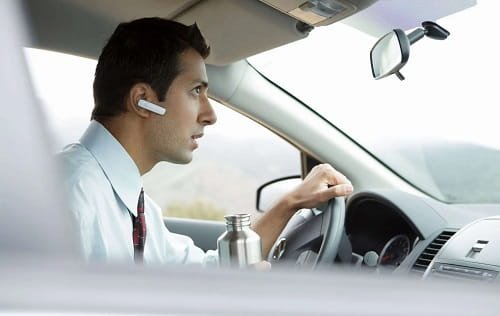
Bluetooth earpieces, wireless car kits, and built-in vehicle infotainment systems that enable hands-free calling have become standard features of modern driving. Yet the legal position on using them while driving in India sits in an uncomfortable grey area — the Motor Vehicles Act prohibits phone use while driving, but does not explicitly address hands-free or Bluetooth devices. Different courts have taken different positions, traffic police in different cities enforce differently, and the scientific evidence consistently shows cognitive distraction persists even with hands-free devices. Here is everything you need to know.
What the Law Says: The Core Provisions
Section 184 of the Motor Vehicles Act, 1988 prohibits driving in a manner that is ‘dangerous to the public having regard to all the circumstances of the case.’ Distracted driving — due to phone calls, however conducted — can make driving ‘dangerous’ under this provision. Punishment for Section 184 violations: imprisonment up to 6 months for first offence; up to 1 year for second offence within 3 years; fine up to Rs 1,000 or Rs 5,000 respectively under the unamended Act, or up to Rs 5,000 under the 2019 Amendment for dangerous driving.
Section 177 of the MVA is the catch-all provision — violation of rules for which no specific penalty is prescribed attracts a fine up to Rs 500.
Section 185 addresses driving under the influence of alcohol or drugs, but the distracted driving issue is covered under Section 184’s general dangerous driving provision.
What the MVA specifically prohibits: ‘use of hand-held communication devices’ while driving. The specific language targets hand-held use — holding a phone to your ear, texting with the phone in hand, etc. Bluetooth/hands-free devices, by definition, involve no hand-holding. This is the basis for the grey area.
The Grey Area: Hands-Free and Bluetooth Devices
The Motor Vehicles Act and the Central Motor Vehicle Rules do not explicitly mention Bluetooth headsets or hands-free infotainment systems. This statutory silence creates genuine legal ambiguity. Two opposing interpretations: the strict interpretation (used by some traffic police departments including Bengaluru) holds that any phone use while driving — including Bluetooth calls — constitutes distracted driving prohibited under Section 184’s dangerous driving provision; the narrower interpretation holds that Section 184’s ‘use of hand-held communication devices’ targets only physical phone handling, and that hands-free devices are not prohibited since they require no physical handling and leave both hands on the wheel.
The Central Motor Vehicles (Amendment) Rules, 2019 specifically emphasise that both hands must remain on the wheel while driving. This reinforces that anything requiring hand-off-wheel physical engagement (including picking up, holding, or manipulating a phone) is prohibited. A Bluetooth headset that requires no physical phone engagement is consistent with the two-hands-on-wheel requirement.
Key Judicial Positions
Kerala High Court (2019): In a landmark ruling, the Kerala High Court held that police cannot file a challan merely because a driver is using a Bluetooth device for a phone call. This judgment is frequently cited as establishing that Bluetooth use while driving is not per se illegal under the MVA. The Court distinguished between using a phone (hand-held) and using a hands-free device (where both hands remain on the wheel).
Bengaluru Traffic Police position: Despite the Kerala HC ruling, Bengaluru traffic police have continued to issue challans for any phone use including Bluetooth devices, taking the position that any conversation creates cognitive distraction and therefore constitutes dangerous driving under Section 184. This broader interpretation has been applied in Maharashtra as well.
The Law Commission of India (2009) had recommended that the MVA be amended to specifically address hands-free devices, but this recommendation has not yet been implemented in law. The legislative gap remains.
The Scientific Reality: Cognitive Distraction
Regardless of the legal grey area, the safety science is unambiguous. Research consistently shows that hands-free phone calls create significant cognitive distraction even when both hands are on the wheel. The driver’s attention is split between the conversation and the driving environment. Studies document increased reaction time, reduced awareness of hazards, and slower response to changing traffic conditions during hands-free calls. The AAA Foundation for Traffic Safety found that hands-free phone conversations create one of the highest distraction levels among common driving activities. Driving while using hands-free phone: similar risk increase to mild alcohol impairment.
This is why traffic police take a broader anti-distraction approach, even if the specific legal provisions do not clearly reach hands-free devices. The public safety purpose of Section 184 supports the broader interpretation.
Practical Guidance: What to Do
Safest legal position: Use your car’s built-in voice-activated calling through the infotainment system (available in most cars built after 2015) rather than a Bluetooth earpiece. Built-in car systems are designed for minimal-distraction use and are unlikely to attract police attention. For urgent calls: use voice commands to answer/end calls without touching any device. Pull over before making important calls that require concentration. Keep Bluetooth calls brief if necessary while driving.
For two-wheelers: Bengaluru and other city police have been particularly active in chalanning two-wheeler riders for using Bluetooth earpieces under helmets or Bluetooth-equipped helmets. For two-wheelers, the safest approach is to not use Bluetooth calling while riding at all — a vehicle at 40-80 km/h on city roads with a cognitive distraction is a significant safety risk regardless of legality.
Insurance implications: If you cause an accident while talking on a Bluetooth device, your insurance company may use this as an argument for contributory negligence on your part, potentially affecting your claim settlement.
Final Thought
Using Bluetooth hands-free devices while driving in India exists in a genuine legal grey area — not clearly prohibited by the specific language of the MVA, but potentially reachable by Section 184’s broader dangerous-driving provision, as enforced by traffic police in cities like Bengaluru. The Kerala HC has provided some protection against arbitrary challaning for Bluetooth use. However, the safety evidence makes the legal debate somewhat academic: cognitive distraction from phone conversations exists even with hands-free devices and creates real accident risk. The best practice: minimise all phone calls while driving. If unavoidable, use built-in car infotainment voice systems and keep calls very brief.
Frequently Asked Questions (FAQs)
Q1. Can I be fined for talking on Bluetooth while driving in India?
It depends on which city you are in. In Bengaluru, traffic police have issued challans for Bluetooth device use under the broader Section 184 dangerous driving provision. In Maharashtra and some other states, similar enforcement has been reported. However, the Kerala High Court (2019) ruled that police cannot issue a challan merely for using a Bluetooth device while driving. The legal position is not settled nationally. The fine amount if challaneed: typically Rs 1,000 first offence, up to Rs 5,000 under MVA 2019 amendment for dangerous driving violations.
Q2. Is using the car’s built-in Bluetooth for calls legal?
Built-in car infotainment systems (like Android Auto, Apple CarPlay, or manufacturer-integrated systems) with voice-activated calling are in the most legally defensible position for hands-free calling while driving. Both hands remain on the wheel; there is no physical device in your hand; the call is managed through voice commands; and the system is integrated by the vehicle manufacturer. Most insurers, traffic authorities, and courts would view this as significantly different from holding a phone or using an earpiece. Even so, the cognitive distraction argument persists — keep calls brief and use voice commands.
Q3. Is using a Bluetooth earpiece on a motorcycle legal?
This is the most legally and practically risky form of Bluetooth use while driving. Bengaluru Police have specifically targeted motorcycle riders with Bluetooth earpieces under helmets. The combination of: (a) motorcycle’s inherent instability; (b) higher cognitive demand of two-wheel riding; (c) reduced ability to hear road sounds through an earpiece; and (d) the Section 184 dangerous driving provision creates significant legal and safety risk. Even in jurisdictions that haven’t actively enforced Bluetooth earpiece use in cars, enforcement has been more aggressive for two-wheelers.
Q4. What should I do if I receive an important call while driving?
The safest and legally clearest approach: signal, pull over safely, stop the vehicle, and then take the call. If you cannot pull over: answer through your car’s built-in voice system using a voice command; keep the call very brief (under 30 seconds) and tell the caller you will call back; or let the call go to voicemail and call back when stopped. Under no circumstances hold a phone to your ear, put it on speaker and hold it, or engage in complex or emotionally involving conversations while moving in traffic. No call is worth an accident, a fine, or a licence suspension.
Q5. If I use a Bluetooth headset and have an accident, what are the legal consequences?
Using a Bluetooth device while driving and having an accident creates multiple legal exposures: Section 184 MVA (dangerous driving) can be invoked if the accident is attributed to distracted driving due to Bluetooth use; civil liability for the accident (you may be found contributorily negligent); insurance complications (insurer may argue the accident was caused by your distracted driving and reduce or deny claim); and if someone is injured, BNS provisions on causing hurt/grievous hurt/death by negligence apply. A traffic investigation report noting you were on a call at the time of accident creates significant legal disadvantage in any subsequent proceedings.