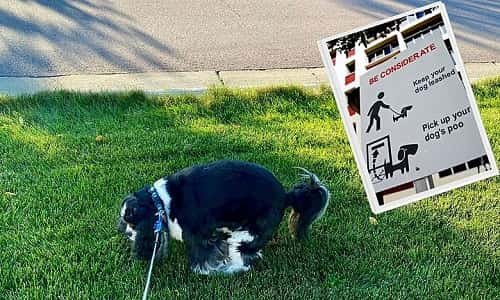
For dog owners and their neighbours alike, pet waste on public footpaths, parks, and residential corridors is a source of genuine friction. Many people believe there is a comprehensive national law requiring dog owners to clean up their pet’s droppings. The reality is more fragmented: there is no single nationwide ‘pooper scooper law’ in India, but a combination of BNS public nuisance provisions, Solid Waste Management Rules, municipal bylaws in progressive cities, and Animal Welfare Board of India (AWBI) guidelines together create a framework of civic and legal obligation.
National Framework: Public Nuisance and Solid Waste Rules
BNS Section 270 (formerly IPC Section 268) — Public Nuisance: ‘A person is guilty of a public nuisance who does any act, or is guilty of an illegal omission, which causes any common injury, danger or annoyance to the public or to the people in general who dwell or occupy property in the vicinity.’ Dog waste left on public footpaths, staircases, parks, and residential common areas creates annoyance to neighbours and injury risks (disease transmission, slip-and-fall) — it falls squarely within the definition of public nuisance. Penalties under BNS Section 270 for public nuisance: fine up to Rs 200 under BNS Section 271 (common nuisance punishment provision). Courts can also issue injunctions ordering the offending behaviour to stop. More practically, calling the police (100) and filing a complaint typically prompts at least a visit and a warning, which often resolves repeated incidents.
Solid Waste Management Rules, 2016 (under the Environment Protection Act): These rules require municipalities to regulate household and commercial waste. Animal excrement is classified as biological waste. While the rules primarily target waste generators (municipalities), they empower Urban Local Bodies to prescribe and enforce cleanliness standards including pet waste management. The New Solid Waste Management Rules 2025 (effective April 2026) strengthen local body accountability but similarly rely on municipalities for specific pet waste protocols.
Municipal Bylaws: Where Actual Enforcement Happens
The most meaningful legal protections against uncollected dog poop come from city-specific municipal laws and bylaws. Delhi: The Delhi Solid Waste Management Bye-laws specify fines for not cleaning up pet droppings in public places — Rs 500 fine with potential imprisonment up to 6 months for persistent violations. Delhi’s municipal corporations actively notified this bylaw under Swachh Bharat Mission. Pune: The Pune Municipal Corporation (PMC) has deployed teams to monitor walking areas and impose Rs 500 fines on dog owners who fail to clean up their pet’s waste. Pune is cited as having the most active implementation in the country. Kolkata: The Kolkata Municipal Corporation imposes tiered fines — Rs 525 for first offence, Rs 735 for second, Rs 1,050 for third. Agra: declared dog poop in public spaces a non-cognisable offence under Section 188 BNS (disobedience of public order) with fines up to Rs 100 and imprisonment up to 6 months. Mumbai: The Brihanmumbai Municipal Corporation’s Solid Waste Management Department has provisions targeting pet waste on public roads, especially after resident welfare association complaints.
AWBI Guidelines: Obligations and Rights of Pet Owners
The Animal Welfare Board of India (AWBI) has issued comprehensive guidelines on pet ownership in residential societies. On the question of dog waste, the AWBI guidelines are clear: ‘Pet owners or any person they entrust their pet to must clean up the pet’s poop, especially in public premises. This is in compliance with the civic duty of keeping the environment clean and for the purpose of respecting the interest of other users of public space.’ Critically, the AWBI guidelines also specify: ‘Pets have the right to defecate, and their owners have been imposed with the obligation to clean up the mess. However, Resident Welfare Associations do not have the right to impose any fine or special charges on pet owners when pets excrete within the premises.’ This creates an important distinction: while the obligation to clean up is clear, only government authorities (municipal corporations, police) — not private housing societies — can impose fines.
Can Housing Societies Fine Pet Owners for Dog Poop?
The AWBI guidelines are explicit: housing societies and RWAs cannot levy fines or additional charges specifically for pet owners whose dogs defecate on society premises. This does NOT mean dog owners have no obligation to clean up — the civic duty exists. It means the enforcement mechanism for that duty runs through municipal authorities and the police, not private society bylaws imposing special charges. Housing societies can mandate that dog owners clean up and can report violations to municipal authorities for proper enforcement.
Practical Steps If a Neighbour’s Dog Regularly Fouls Your Space
Step 1: Politely speak to the dog owner — the vast majority of incidents resolve here. Step 2: Send a written communication (WhatsApp, email, or letter) to create a record of your complaint. Step 3: File a complaint with your local municipal corporation’s solid waste management or public health department — cite the relevant SWM Rules and municipal bylaws. Step 4: File a police complaint under BNS Section 270 (public nuisance) at your local police station. Step 5: Approach the Resident Welfare Association or housing society management committee and request formal action through the management, not a direct fine.
Final Thought
India does not yet have a nationwide ‘scoop the poop’ law equivalent to those in the UK, US, or Singapore. But the absence of a central statute does not mean dog owners have no legal obligation. Public nuisance provisions (BNS Section 270), Solid Waste Management Rules, active municipal bylaws in cities like Delhi, Pune, Kolkata, and Agra, and the AWBI’s explicit guidelines all create a framework of enforceable civic responsibility. The direction of law and policy is clearly towards greater accountability for pet waste — be the responsible dog owner: carry a bag, clean up, dispose properly.
Frequently Asked Questions (FAQs)
Q1. Is there a law requiring dog owners to clean up after their dogs in India?
There is no single nationwide ‘clean up after your dog’ statute. However, the obligation arises from multiple sources: BNS Section 270 (public nuisance), Solid Waste Management Rules 2016 (empowering municipalities to enforce cleanliness), municipal bylaws in cities like Delhi, Pune, Kolkata, Agra, and Mumbai, and AWBI guidelines which explicitly state pet owners must clean up their pet’s waste in public spaces. The practical enforcement is municipal — check your city corporation’s specific rules.
Q2. Can I complain to the police about a neighbour whose dog regularly fouls public areas?
Yes. A persistent pattern of uncollected dog waste in a shared public space (staircase, walkway, park) constitutes public nuisance under BNS Section 270. You can file a police complaint at your local police station citing this provision. Police involvement following a complaint (even if it results only in a warning visit) is often effective in changing behaviour. For registered complaints, ask for a written acknowledgement. If the problem persists, approach a Magistrate under BNS Section 271 for a public nuisance order.
Q3. Can a housing society ban dogs because of poop problems?
No. The AWBI guidelines, supported by multiple High Court rulings, prohibit housing societies from banning pets — including dogs — even if a majority of residents support the ban. A housing society cannot evict or prohibit a pet owner from keeping a dog based on the dog defecating in common areas. What the society CAN do: require dog owners to clean up; report non-compliant owners to municipal authorities; impose reasonable hygiene conditions in society bylaws consistent with AWBI guidelines; and designate pet-friendly areas with waste bins.
Q4. What should I do if I see someone not cleaning up their dog’s mess in a park?
Document the incident with a photo or video if possible (without confrontation). Note the time, location, and description of the person. Report to the municipal park management or the park authority. File a complaint with your city corporation’s complaint portal (most cities now have app-based complaint systems). In Delhi, Pune, and Mumbai, this is taken seriously by the Swachh Bharat enforcement teams. You can also share evidence with your local police station as supporting material for a public nuisance complaint.
Q5. Is dog poop a public health issue or just a nuisance issue in India?
Both. Dog waste is not biodegradable in the way cow dung is — it contains pathogens including Toxocara (roundworm eggs), Campylobacter, Salmonella, Giardia, and other bacteria that survive in soil for extended periods. Dog waste in public parks and walkways is a documented public health concern, particularly for children who play on the ground. Multiple municipal corporations have cited public health (not just nuisance) as the basis for pet waste bylaws. The law treats it primarily as a public nuisance issue under current provisions, but the health dimension is increasingly acknowledged in policy discussions.