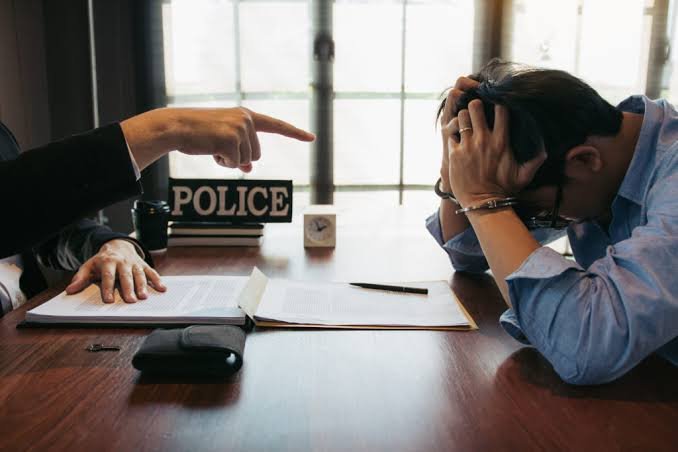
Picture someone who lost their job, then their apartment, and is now sleeping in their car outside a public park because every shelter bed in the county is already full. A police officer approaches and issues a citation for illegal camping. The person’s obvious question in that moment is simple and completely fair: how can something be illegal if there’s genuinely nowhere else to go? This exact scenario has played out across the country with growing frequency, and a major 2024 Supreme Court decision fundamentally changed the legal answer.

The Core Distinction That Actually Matters
Being homeless itself has never been illegal anywhere in the United States. No law criminalizes the status of lacking housing. What’s illegal, and what’s become significantly easier for cities to enforce, is specific conduct tied to homelessness: sleeping on public sidewalks, camping in parks, or setting up a tent on public property. This distinction between punishing a status versus punishing conduct sits at the heart of the entire legal framework, and it’s exactly what the Supreme Court addressed directly in 2024.
The Case That Changed Everything
In June 2024, the Supreme Court decided City of Grants Pass v. Johnson in a 6-3 ruling, upholding a small Oregon city’s ordinances banning camping and sleeping on public property. The case originated when Grants Pass, a city of roughly 39,000 people with an estimated 600 individuals experiencing homelessness on any given day, enforced camping bans that escalated from fines to park bans to potential jail time for repeat violations.
Before this ruling, the Ninth Circuit’s earlier decision in Martin v. Boise had prevented cities across the western United States from enforcing camping bans against homeless individuals whenever available shelter space fell short of the actual homeless population. The Supreme Court’s majority, in an opinion written by Justice Neil Gorsuch, rejected this framework entirely, reasoning that the ordinances applied to anyone camping in public, regardless of housing status, meaning they regulated conduct rather than punishing someone specifically for being homeless.
What the Dissent Argued
Justice Sotomayor, joined by Justices Kagan and Jackson, wrote a forceful dissent arguing that these ordinances effectively criminalize homelessness as a status, since they prevent unhoused people from performing the basic biological necessity of sleep anywhere in public, even when literally no alternative shelter option exists. The dissent emphasized that fining or jailing someone for sleeping outside, when they have nowhere else to sleep, functions practically the same as punishing them for being homeless, regardless of how the statute is technically worded.
What Actually Changed for Cities Nationwide
Following the ruling, cities and states gained significantly more legal room to enforce camping bans even when local shelters are completely full. This represents a genuine shift from the pre-2024 landscape, where cities in the western states covered by the Ninth Circuit faced real legal exposure for enforcing these ordinances against people with no available shelter alternative. Since the ruling, numerous cities and states have passed new or strengthened camping bans, and advocacy groups tracking this trend have documented a marked nationwide increase in ordinances criminalizing public homelessness in the time since.
Tennessee Represents the Most Extreme Approach
Tennessee currently has the strictest homelessness-related law in the country. Camping on public property carries a Class A misdemeanor for a first offense, punishable by up to nearly a year in jail, but a second or subsequent offense escalates to a Class E felony carrying up to six years in state prison. This makes Tennessee the only state where sleeping outside can realistically become a felony conviction, and state officials have specifically pointed to the Grants Pass ruling as validation for ramping up enforcement under this law.
The Pattern Playing Out Differently Across States
Not every state has moved in the same direction. Florida enacted a statewide law requiring counties to either prohibit public camping outright or establish designated legal sleeping sites, with both provisions now active. Kentucky’s legislature overrode a governor’s veto to pass a law making repeated camping on certain property a misdemeanor, while also controversially allowing property owners to use deadly force against people illegally camping on their land. On the other hand, some jurisdictions have pushed back against the broader national trend; Los Angeles County reaffirmed a policy against criminalizing homelessness shortly after the ruling, and Pennsylvania lawmakers introduced bills in late 2025 specifically aimed at preventing camping bans from being enforced without genuinely adequate alternative shelter space available.
What Remains Legally Off-Limits Even After Grants Pass
Despite the significant shift in what cities can enforce, certain protections remain intact. You cannot be jailed purely for the status of being homeless, separate from any specific conduct violation; courts have consistently held that punishing status alone still violates the Eighth Amendment under the older Robinson v. California precedent, which the Grants Pass ruling notably did not overturn. Additionally, the Supreme Court’s decision specifically left open the separate question of whether fines that someone genuinely cannot afford to pay might violate the Eighth Amendment’s Excessive Fines Clause, an issue that remains unresolved and could still matter significantly in future legal challenges.
FAQs
Q1. Can someone actually be arrested just for being homeless, with no other charge involved?
No. Courts have consistently held that punishing someone purely for their status as homeless, without any accompanying conduct like camping or trespassing, would violate the Eighth Amendment. What’s legal to punish is the specific conduct, not the status itself.
Q2. Does the Grants Pass ruling mean shelters no longer matter when cities enforce camping bans?
Essentially yes in terms of the federal constitutional question. Cities can now enforce camping bans even when shelter space is completely unavailable, though some individual states have passed their own laws requiring certain shelter conditions be met first.
Q3. Is Tennessee really the only state where sleeping outside can become a felony?
Yes, as of the most recent information available, Tennessee stands alone in allowing repeated public camping violations to escalate to felony charges carrying multi-year prison sentences.
Q4. If I can’t afford a fine for a camping violation, can I still be forced to pay it?
This specific question, whether an unaffordable fine violates the Eighth Amendment’s Excessive Fines Clause, was not resolved by the Grants Pass decision and remains a genuinely open legal question that could be challenged separately in future cases.