Picture this: it’s a scorching Texas afternoon, you’ve just kicked off your sandals after a beach walk, and you’re about to drive home. A nagging thought hits you — didn’t your driving instructor once say something about barefoot driving being against the law? That old warning has followed millions of American drivers for decades, yet almost nobody has ever actually checked whether it’s true. The answer might catch you off guard, and it’s worth knowing before you assume you’re breaking a law that doesn’t exist.
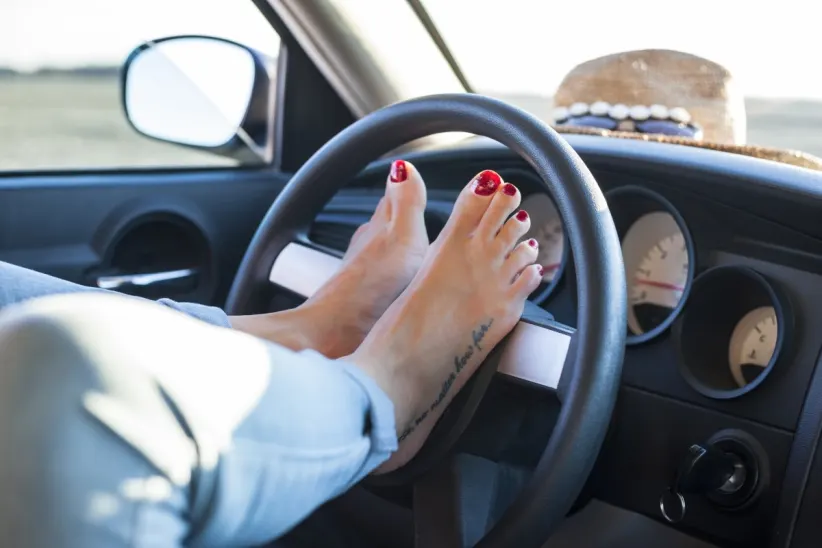
Where the Barefoot Driving Myth Came From
Back in 1994, a curious man named Jason Heimbaugh got tired of hearing the same rumor repeated at every dinner table. So he wrote directly to the department of motor vehicles in all 50 states and D.C., asking a simple question: is there any law against driving without shoes? Every single response came back the same way — no such law exists anywhere in the country. That research still holds up today, three decades later.
The myth likely survived because parents used it as a scare tactic to get kids to wear shoes, and driver’s education instructors repeated safety advice as if it were statute. Neither source was lying about safety, but neither was describing actual law either.
What State Vehicle Codes Actually Say
Go through the traffic code of any state — California, Ohio, Florida, Texas — and you won’t find a single sentence about driver footwear. Vehicle codes regulate things like seatbelts, phone use, tinted windows, and speed limits, but shoes simply never made the list. A few states have gone as far as issuing formal guidance calling barefoot driving “unsafe,” including Indiana, Iowa, Missouri, Virginia, and Wyoming. Calling something unsafe in a policy note, though, is a world apart from making it a punishable offense.
Where the Exceptions Actually Live
Commercial trucking is the one corner of this topic where footwear rules genuinely apply. The Federal Motor Carrier Safety Administration requires commercial drivers to wear shoes or boots that provide secure pedal grip and proper foot support. That rule exists because commercial vehicles carry different safety stakes than a family sedan.
Motorcycles are another exception in specific states. Alabama, for instance, permits barefoot driving of cars but explicitly prohibits it for motorcycle operators. Given how a motorcycle rider’s feet interact with foot pegs and gear shifters, this distinction makes practical sense.
The Real Risk Isn’t a Ticket — It’s Liability
Here’s the part most drivers never think through. Even though no officer can pull you over purely for having bare feet, that detail can resurface if you’re ever in an accident. Insurance adjusters sometimes bring up footwear when arguing about fault, especially if a driver lost control of the pedals during a crash. An attorney representing the other party might frame your bare feet as a contributing factor to careless or reckless driving, even without a standalone barefoot charge.
This matters more in personal injury claims than in traffic court. If your case ends up in a system that weighs proportionate fault, like Texas’s shared-responsibility model, any factor that nudges your assigned blame upward can shrink your compensation. So while you can’t be ticketed for driving shoeless, you can absolutely have it used against you after the fact.
Practical Tips If You Prefer Driving Barefoot
Sweaty feet and metal or rubberized pedals aren’t a great combination for control. If you do drive without shoes regularly, keep a towel in the car to dry your feet beforehand, and make sure loose sandals or flip-flops aren’t rolling around near the pedals where they could jam the brake or accelerator. That single habit — a stray shoe wedged under the pedal — causes far more accidents than actual bare feet do.
City and County Rules Can Differ
State law is only half the picture. Local ordinances in some cities regulate things like reckless driving, vehicle control, and public nuisance behavior more tightly than state codes do. While no city has been found to specifically ban barefoot driving either, these local rules move faster and change more often, so it’s worth a quick check if you’re driving somewhere with a reputation for stricter municipal codes.
FAQs
Q1. Can a police officer pull me over just for driving barefoot?
No. Officers have no legal basis to stop a driver solely because their feet are bare. A stop would need an independent reason, like a traffic violation or reckless driving behavior.
Q2. Is barefoot driving safer than driving in flip-flops?
Many safety experts actually consider bare feet safer than loose sandals or high heels, since footwear like flip-flops can slip off and get stuck under pedals.
Q3. Will barefoot driving affect my insurance claim after an accident?
It could be raised as supporting evidence if the insurer or opposing party argues you lost control of the vehicle, even though it isn’t illegal on its own.
Q4. Do any US states actually ban barefoot driving?
No state bans it for standard passenger vehicles. The closest thing to a restriction applies to commercial truck drivers and, in a few states, motorcycle riders.