Yes, it is illegal to pump your own gas in New Jersey. It’s the only state left in the entire country where this remains a complete, statewide ban at every retail gas station. Oregon, which shared this distinction with New Jersey for decades, changed its law in 2024 to allow self-service in most areas, officially leaving New Jersey standing alone.
Where This Law Actually Came From
The ban traces back to 1949, when New Jersey passed the Retail Gasoline Dispensing Safety Act. The legislation states plainly that only trained attendants may dispense fuel at a gas station, and it specifically prohibits attendants from allowing anyone else to pump gas into a vehicle’s tank. The stated reasoning centers on fire safety: gasoline is genuinely flammable, and lawmakers concluded that trained attendants were better positioned to enforce safety procedures like ensuring engines are off and nobody is smoking near the pumps.
There’s also a less-publicized origin story tied to competition rather than pure safety. In the 1940s, an entrepreneur named Irving Reingold opened a self-service station in Hackensack that undercut competitors on price. Rival gas station owners, unable to compete on cost, lobbied for legislation restricting self-service instead, and the Gasoline Retailers Association helped push the ban through the legislature relatively quickly.
What Counts as “Fuel” Under This Law
The statute defines fuel broadly, covering gasoline and any other flammable liquid sold to power a motor vehicle. This means the self-service ban applies across grades, including regular, premium, and diesel. A 2023 amendment went further, extending enforcement to liquid fuel dispensers located at sites that also offer electric vehicle charging, closing a potential loophole at mixed-fuel locations where drivers might otherwise try to fuel up themselves under the assumption that EV-adjacent equipment operates differently.
Who’s Actually Liable If Someone Tries to Self-Serve
The law places responsibility primarily on the attendant and the station operator rather than the customer trying to pump. An attendant who permits a customer to dispense their own fuel is in violation, and the retail dealer operating the station faces the more serious financial exposure. Civil penalties start at $50 to $250 for a first offense and climb to $500 for each subsequent violation, with every single day a station operates out of compliance counting as a separate, additional offense. Enforcement remains genuinely active; New Jersey issued well over a thousand citations statewide in a recent year, showing this isn’t a forgotten rule sitting unused on the books.
Why Attendants Physically Stop You
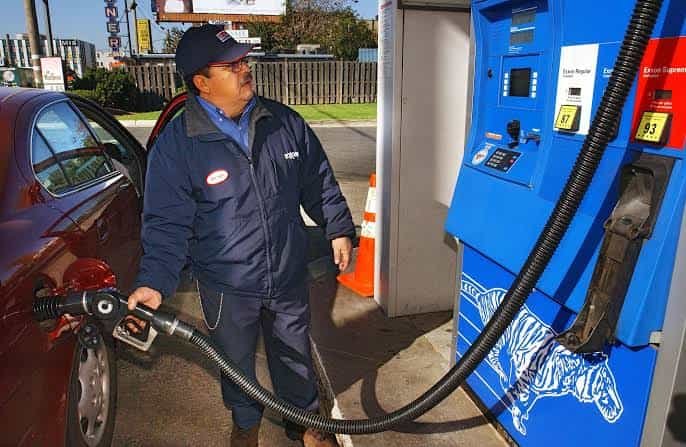
Because station operators bear meaningful financial risk for allowing self-service, most stations train their attendants to intervene quickly and firmly if a customer tries to grab the nozzle themselves. Point-of-sale systems at many stations are specifically programmed to require attendant selection before a gasoline transaction can even process, meaning attempting to bypass this typically just results in a declined transaction rather than successfully dispensing fuel yourself.
The Narrow Exceptions That Do Exist
A handful of limited exceptions apply. Vehicles owned by the gas station itself, emergency service vehicles, and certain farm equipment may be refueled by their own owners or operators rather than requiring an attendant. Notably, there’s no exemption based on residency; out-of-state drivers passing through New Jersey are held to the exact same rule as lifelong residents, so claiming unfamiliarity with the law offers no practical protection from citation.
Why Efforts to Repeal This Law Keep Stalling
Several legislative attempts to loosen or repeal the self-service ban have surfaced over recent years, including a 2025 proposal that would have allowed self-service at stations with four or more pumps while still requiring attendants for anyone needing assistance. None of these bills have made it out of committee, and public opinion polling has consistently shown that a solid majority of New Jersey residents actually prefer keeping the current system, viewing full-service as a genuine point of state pride rather than an inconvenience.
The Practical Argument That’s Emerged Alongside Safety
Beyond the original fire safety rationale, supporters increasingly point to job protection as an equally important factor. New Jersey employs thousands of people specifically as gas station attendants, and eliminating the self-service ban would put a meaningful number of these positions at risk. The law’s supporters also note that attendants often catch basic vehicle maintenance issues while fueling cars, a benefit customers might not seek out on their own if left entirely to their own devices at the pump.
What to Actually Expect at the Pump
If you’re new to New Jersey or just passing through, the process is genuinely simple once you know what to expect. Pull up to the pump, stay in your car, and roll down your window when the attendant approaches. Tell them what grade of gas you want and how much, hand over your payment method, and they’ll handle the rest. Tipping isn’t customary or expected, since attendants are paid at least minimum wage statewide, though a small tip for extra service like a quick windshield clean isn’t unheard of.
FAQs
Q1. Can I get in trouble if I accidentally start pumping my own gas without realizing it’s not allowed?
In practice, most stations have point-of-sale systems that block gasoline transactions unless an attendant handles them, and attendants are trained to intervene quickly, so accidental violations rarely escalate to an actual citation for the customer.
Q2. Does the self-service ban apply to diesel and premium gas too, or just regular unleaded?
Yes, the ban covers all grades of gasoline as well as diesel, since the law defines “fuel” broadly to include any flammable liquid sold to power a motor vehicle.
Q3. Are there any New Jersey gas stations where self-service is actually allowed?
No, the statewide ban applies to every retail gas station in New Jersey with only narrow exceptions for station-owned vehicles, emergency vehicles, and certain farm equipment refueled by their own operators.
Q4. Is New Jersey likely to change this law anytime soon?
Several repeal bills have been introduced in recent years, but none have advanced past committee, and polling shows most residents actually prefer the current full-service system, so a near-term change seems unlikely.