This is the entire misunderstanding driving confusion about kratom and driving. Kratom is legal for adults in more than 30 states under regulated frameworks, sold openly in gas stations and smoke shops. That legality covers purchasing and possessing it. It says absolutely nothing about whether you can legally get behind the wheel after taking it, because every state’s DUI law asks a completely separate question: were you impaired while driving, regardless of what substance caused that impairment.
Why Pennsylvania’s Recent Court Case Changed the Conversation Nationally
A 2026 Pennsylvania Superior Court decision, Commonwealth v. Walsh, addressed this exact question directly and confirmed something defense attorneys had been debating for years: you can be prosecuted for DUI in Pennsylvania after using kratom, even though kratom itself isn’t classified as a controlled substance there. The case began with a traffic stop for erratic driving, where the officer observed constricted pupils, agitation, and difficulty speaking. The driver refused field sobriety testing, but police recovered multiple kratom bottles from the vehicle, and blood testing later confirmed mitragynine, kratom’s active compound, along with caffeine. The court’s ruling made clear that Pennsylvania’s DUI statute focuses on actual impairment, not on whether the specific substance causing that impairment happens to be scheduled or controlled.
Why DUI Law Cares About Impairment, Not the Substance’s Legal Category
This principle extends well beyond Pennsylvania and reflects how most state DUI statutes are actually written. Some states define impaired driving broadly enough to cover “any substance” affecting your ability to drive safely, language that captures kratom automatically regardless of its separate legal status. Other states technically limit prosecution to controlled substances specifically, which creates more legal ambiguity for kratom cases, though prosecutors in these states have still pursued charges using general impaired-driving provisions rather than substance-specific ones. Either way, the operative legal question in virtually every jurisdiction is whether your driving was actually impaired, not whether the substance you took carries a controlled-substance label.
Why Kratom’s Effects Genuinely Complicate Safe Driving
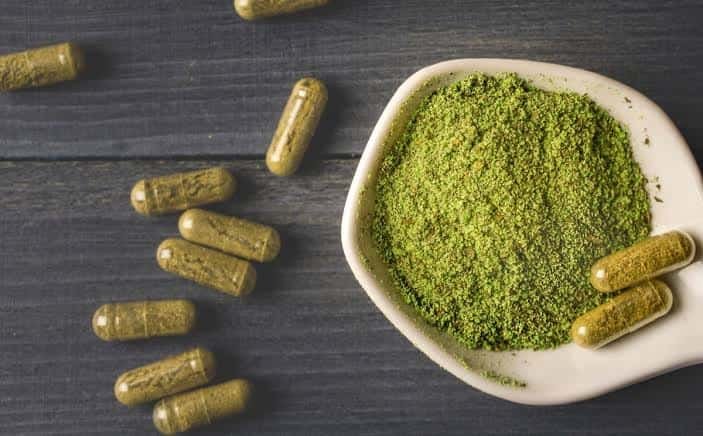
Kratom’s active compound, mitragynine, binds to opioid receptors, and its effects vary considerably depending on dose. At lower doses, it tends to produce a jittery, stimulant-like response. At higher doses, it can cause sedation, altered perception, and measurably slowed reaction time. This dose-dependent variability is part of why it presents a genuine driving safety concern regardless of its legal status; someone might feel simply alert or mildly energized while their actual reaction time and judgment are meaningfully compromised.
Why Standard Roadside and Lab Tests Often Miss It Entirely
Here’s a detail that shapes how these cases actually unfold in practice. Kratom doesn’t reliably show up on standard drug tests used in typical DUI stops, including many blood, urine, and mouth swab panels, and Texas’s own state crime lab blood analysis doesn’t test for it by default. This creates a genuinely unusual enforcement pattern; officers often can’t rely on a positive test the way they would for alcohol or more commonly screened drugs. Instead, prosecution tends to hinge heavily on observed behavioral evidence, erratic driving, physical signs like constricted pupils or slurred speech, failed field sobriety tests, and any physical kratom products found in the vehicle, rather than a definitive toxicology result confirming the substance’s presence.
Why This Cuts Both Ways for Someone Facing Charges
The absence of routine kratom testing creates genuine uncertainty in both directions. On one hand, someone who used kratom and drove without exhibiting obvious signs of impairment might never get flagged at all, since there’s no routine screening catching it automatically. On the other hand, someone can still be arrested and charged based purely on observed behavior and circumstantial evidence, even without a positive lab result confirming kratom in their system, since prosecutors can build a DUI case around impairment evidence generally rather than needing to isolate the specific causal substance.
Why the Underlying Legal Status of Kratom Is Shifting Right Under This Issue
As of mid-2026, roughly eight states have fully banned kratom outright, making possession, sale, and manufacture criminal offenses regardless of driving. More than 30 states regulate it as legal for adults 21 and older under frameworks requiring labeling, testing, and caps on certain concentrated compounds. Tennessee’s ban took effect in July 2026, while Rhode Island moved in the opposite direction, becoming the first state to reverse an earlier prohibition and shift toward regulated legality. This means the baseline legal status of kratom itself is genuinely in flux depending on where you live, layered on top of the separate driving-impairment question that applies regardless of that underlying status.
Why Federal Action on Concentrated Compounds Could Change Everything Again
There’s a separate regulatory development worth knowing about specifically. If federal authorities move forward with scheduling concentrated 7-OH, a specific compound derived from kratom, that would make manufacturing, selling, or possessing that concentrated form illegal nationwide, regardless of any individual state’s current position. Notably, this potential scheduling would specifically target the concentrated compound rather than natural, whole-leaf kratom, which would likely remain unscheduled unless addressed through entirely separate action, meaning the legal landscape here could shift again even for the more traditional forms of the product.
Why Local Ordinances Can Override State-Level Legality
Even within states that broadly permit kratom, individual cities and counties have carved out their own local bans. Kratom is legal statewide in California but specifically banned within San Diego. Similar local prohibitions exist in Denver, Colorado, Jerseyville, Illinois, Union County, Mississippi, and Sarasota County, Florida. Anyone traveling between jurisdictions genuinely needs to check local rules separately from state law, since state-level legality provides no guarantee about what a specific city or county has independently decided.
FAQs
Q1. If kratom doesn’t show up on a standard drug test, does that mean I can’t actually be convicted of DUI for using it?
No, prosecutors can still build a case using observed behavioral evidence, failed field sobriety tests, and physical evidence like kratom products found in your vehicle, meaning a negative or absent lab result doesn’t automatically prevent a conviction.
Q2. Does it matter whether my state classifies kratom as a controlled substance when it comes to DUI charges?
Not necessarily, since many state DUI statutes are written broadly enough to cover impairment from any substance, meaning prosecutors can pursue charges even when the specific substance involved isn’t formally classified as controlled.
Q3. Can I be charged with DUI for kratom in a state where kratom itself is completely legal to buy and possess?
Yes, legal purchase and possession status has no bearing on whether driving while impaired by that substance is separately illegal, since DUI law targets impairment rather than the substance’s underlying legal classification.
Q4. Is there a safe amount of time to wait after taking kratom before driving becomes legally and practically safe?
There’s no established, universally agreed-upon waiting period, since effects vary significantly by dose, individual tolerance, and formulation, making it safest to avoid driving entirely until you’re fully confident your reaction time, coordination, and judgment have returned to normal.