Not one state, territory, or the District of Columbia has a law specifically prohibiting driving with your dome light, map light, or cabin light on. This isn’t a case of the rule existing quietly in some obscure states while others stay silent; the prohibition simply doesn’t exist anywhere in American traffic law. Vehicle codes across the country regulate exterior lighting in meticulous detail, headlight brightness, taillight function, turn signal timing, precisely because exterior lights communicate information to other drivers on the road. Interior lights serve only the people inside the vehicle, and courts and legislatures have consistently treated that as a fundamentally different category not requiring the same regulation.
Why the Myth Became Such Effective Parenting Shorthand
There’s a genuinely interesting reason this specific myth spread so widely and lasted so long. Telling a fidgety kid in the backseat “turn that off, you’ll get us pulled over” ends an argument instantly, far faster than actually explaining anything about visibility or driver distraction. The claim of illegality worked precisely because it borrowed the authority of law to settle what was really just a parental preference about safety and focus. Once repeated across enough generations, it calcified into something people simply accepted as fact without ever checking a single statute.
The Real Distinction: Direct Violations Versus What Your Behavior Creates
Understanding why this myth persists despite being false requires grasping one useful legal concept. A direct violation means you broke a specific, named rule, running a red light, exceeding a posted speed limit. An indirect violation means your action created a condition that trips a broader safety statute, even though no law names that specific action itself. Interior lighting falls firmly into this second category. The dome light itself breaks nothing. But if it causes you to swerve, if you’re staring at your phone under that light instead of watching the road, or if the glare genuinely obstructs your own visibility, you’ve created the kind of unsafe driving condition that broad statutes like careless operation or reckless driving are specifically written to catch.
How States Actually Word the Laws That Could Apply
Since no statute mentions dome lights by name, prosecutions or citations connected to this topic always run through general-purpose safety language instead. California Vehicle Code Section 22350 allows citations for driving at speeds not reasonable or prudent given the circumstances. Texas Transportation Code Section 545.401 covers reckless driving defined as willful or wanton disregard for safety. Neither statute references interior lighting even once, yet both could theoretically apply if a dome light contributed to genuinely unsafe driving. The light is never the charge on the ticket; the resulting unsafe behavior is.
Why Officers Still Have Real Discretion Here
Most states give police officers meaningful latitude to judge whether current driving conditions look unsafe, and this discretion is exactly where a dome light stop becomes legally possible in practice, even without a specific law against the light itself. An officer patrolling at night who spots a glowing interior might reasonably watch that vehicle more closely for signs of drifting, delayed reaction, or other distraction indicators. If those signs show up, the officer has legitimate grounds for a stop under general distracted or careless driving provisions; if the driver is maintaining perfect lane position and normal speed the entire time, the glowing dome light alone gives the officer nothing to cite.
The Rideshare Passenger Scenario That Actually Comes Up Constantly
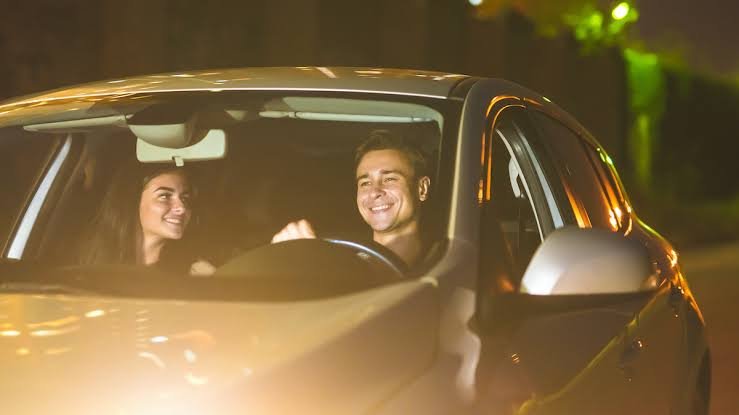
Picture a rideshare driver whose passenger needs a few seconds of light to locate a dropped phone or wallet before getting out at the curb. The driver flips the dome light on briefly while slowly pulling away. No law gets broken in this scenario, no fine applies, and no points land on anyone’s license, because nothing about that brief, low-speed use of interior lighting created any actual driving hazard. This kind of routine, harmless interior light use happens constantly across the country every single day without any legal consequence whatsoever.
Why LED Interior Lights Follow the Exact Same Rules
Modern vehicles increasingly come equipped with LED interior lighting, sometimes including customizable ambient lighting strips, and the same underlying principle applies to these as it does to a traditional dome light. They’re generally legal to use while driving in most situations, following the identical framework: the light itself isn’t regulated, only the behavior it might cause or the visibility problems it might create. The one meaningful caution here involves aftermarket LED modifications that produce red or blue light visible from outside the vehicle, since several states specifically restrict these colors due to their association with emergency vehicles, a genuinely separate legal issue from ordinary interior cabin lighting.
Does Simply Having the Light On Count as Distracted Driving on Its Own
This is worth addressing directly, since it’s a common follow-up question. Having your dome light illuminated does not, by itself, meet the legal definition of distracted driving anywhere. Distracted driving requires an actual diversion of attention from the driving task, texting, reading, digging through a bag. If someone happens to be doing one of those things while the light is on, that activity is what constitutes the violation, not the ambient light making it visible. The light is simply incidental to whatever behavior is actually creating the legal problem.
FAQs
Q1. If a police officer pulls me over specifically because they saw my interior light on, do I have grounds to contest the stop?
Potentially yes, since the light itself isn’t a citable offense anywhere, meaning if no other genuine traffic violation or unsafe driving behavior was observed, an officer would have no valid legal basis for the stop beyond the light alone.
Q2. Does it matter if I’m driving a rental car or a car borrowed from a friend rather than my own vehicle?
No, the legal analysis stays exactly the same regardless of vehicle ownership, since no state’s law regarding interior lighting distinguishes between a personally owned car, a rental, or a borrowed vehicle.
Q3. Can having my interior light on while driving affect my car insurance rates if I’ve never actually been cited for anything?
No, since there’s no citation or violation tied to the light itself, there’s nothing for an insurance company to factor into your rates unless the light contributed to an actual accident or a separate traffic citation was issued.
Q4. Is there any specific state where interior lighting rules are meaningfully stricter than the rest of the country?
No, every state relies on the same general framework of careless driving, distracted driving, or unsafe operation statutes rather than a dedicated interior lighting law, meaning there’s no state where dome lights themselves carry a unique, specific legal restriction.