Texting while driving is banned for all drivers in 49 states, the District of Columbia, Puerto Rico, Guam, the Northern Mariana Islands, and the US Virgin Islands. That leaves exactly two states without a comprehensive statewide ban covering every driver: Montana and Missouri, and even these two aren’t quite the free-for-all they sound like at first glance.
Why Montana Isn’t Actually a Free Pass
Montana has no state-level restriction on phone use for adult drivers, which genuinely makes it an outlier nationally. Some individual Montana cities have passed their own local ordinances addressing the issue, but at the state level, there’s no texting-specific prohibition for most drivers. Here’s the catch, though: if texting while driving in Montana contributes to causing an accident, you can still be charged under the state’s negligent driving laws. It’s a fundamentally different kind of deterrent than an upfront ban, one that only bites after something goes wrong, rather than the moment you pick up your phone.
Why Missouri Sits in a Genuinely Unusual Middle Ground
Missouri’s law specifically targets drivers aged 21 and younger, banning texting while driving for that group and attaching a $200 fine plus two license points to violations. There’s no comprehensive statewide texting ban covering adult drivers over 21 in Missouri, though the state recently added a hands-free law covering all drivers in certain specific contexts, layering a partial restriction on top of its age-based texting rule rather than replacing it entirely.
The Real Distinction That Trips Up Drivers Crossing State Lines: Texting Ban Versus Hands-Free Law
This is genuinely the most important thing to understand if you drive across multiple states regularly, since these two categories of law aren’t the same thing at all. A texting ban specifically targets composing, sending, or reading text messages while driving; it typically still permits holding your phone to your ear for an actual voice call. A hands-free law goes considerably further, prohibiting holding your phone for any reason at all while driving, whether that’s a call, navigation, checking social media, or anything else. This means in a hands-free state, holding your phone up to your ear for a voice call is just as illegal as texting, while in a state with only a texting ban, that same phone call remains completely legal.
Where the Hands-Free Movement Actually Stands as of 2026
As of 2026, 33 states plus Washington D.C. now enforce comprehensive hands-free laws banning all handheld phone use behind the wheel. This movement gained real momentum after Georgia passed a landmark hands-free law back in 2018 and saw measurable reductions in distraction-related fatalities afterward, which effectively became the template other states began adopting. Colorado, Pennsylvania, Iowa, Louisiana, South Carolina, and Kansas are among the more recent additions to this growing list, reflecting how quickly this specific category of law has expanded over just the past few years.
Why South Carolina’s Recent Rollout Shows How These Laws Typically Launch
South Carolina’s Hands-Free and Distracted Driving Act took effect September 1, 2025, but the state built in a deliberate 180-day warning period before actual citations began, meaning enforcement didn’t shift from warnings to real penalties until late February 2026. This kind of phased rollout is fairly common when states introduce a significant new hands-free requirement, giving drivers time to genuinely adjust their habits, invest in phone mounts or Bluetooth setups, and become aware of the new rule before it starts carrying real financial consequences.
Primary Versus Secondary Enforcement Changes Whether You Can Be Pulled Over for This Alone
Most states treat texting-while-driving violations as a primary offense, meaning an officer can stop and cite you specifically for texting, without needing any other reason to have pulled you over in the first place. A smaller number of states classify it as a secondary offense instead, meaning police can only add a texting citation if you’ve already been stopped for some separate violation, like speeding or running a light. This distinction matters practically; in a primary-enforcement state, visibly texting at a red light alone can justify a stop the moment the light changes and you start driving, while a secondary-only state requires some other independent reason first.
Why Stopped at a Red Light Isn’t Automatically the Same as Driving
A detail worth knowing if you’ve ever wondered whether checking a text at a red light counts: most hands-free and texting laws specifically exempt drivers who are lawfully parked or stopped, distinguishing that from actually operating the vehicle in traffic. This means glancing at your phone while genuinely stationary at a red light generally falls outside these restrictions in most states, though the moment traffic starts moving again, that same activity typically becomes a violation if you’re still holding or interacting with the device.
Why This Category of Violation Carries Uniquely Combined Risk
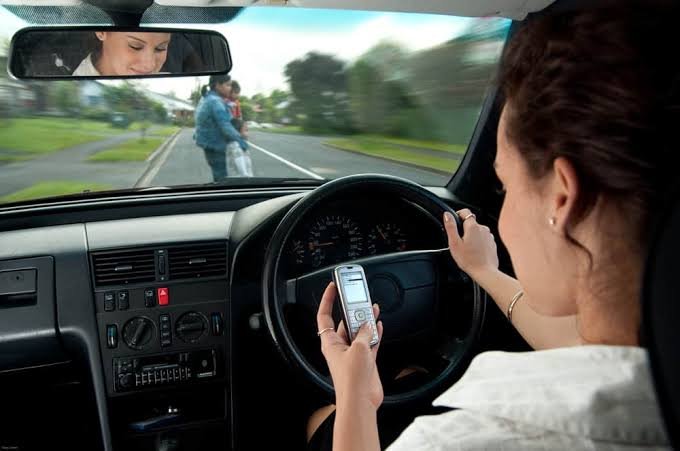
Texting while driving is treated with particular seriousness across nearly every state’s traffic code specifically because it combines all three recognized types of driving distraction simultaneously: visual, since your eyes leave the road; manual, since your hands leave the wheel; and cognitive, since your attention shifts toward composing or reading a message rather than the road ahead. This layered combination is precisely why lawmakers have consistently treated texting bans as a higher legislative priority than many other distracted driving behaviors, even in states that haven’t yet moved to a full hands-free standard.
FAQs
Q: If I’m using my phone’s voice-to-text feature to send a message hands-free, does that avoid violating these laws?
A: It depends on the specific state, since some texting bans focus narrowly on manually composing or reading messages and may allow voice-to-text, while comprehensive hands-free laws in other states restrict handheld device interaction broadly enough that even initiating voice-to-text through touching the phone can still count as a violation.
Q: Can I be cited for texting while driving in a state with only a secondary enforcement law if I wasn’t doing anything else wrong?
A: Generally no, since secondary enforcement means an officer needs an independent reason to stop you first, meaning texting alone, without another observed violation, typically can’t justify the initial stop in these specific states.
Q: Does using a phone mounted on my dashboard for navigation violate a hands-free law?
A: Generally no, since hands-free laws typically target holding or manually manipulating the device, and a properly mounted phone used for navigation without being held usually complies with these requirements, though briefly touching the screen to input an address while driving can still create risk depending on the specific state’s wording.
Q: If Montana has no statewide texting ban, does that mean texting while driving there carries zero legal risk?
A: Not entirely, since while there’s no upfront ban to violate, causing an accident while texting can still result in negligent driving charges under Montana law, meaning the legal risk shifts from an immediate citation to potential consequences after the fact.