Millions of Indian Christians get married in church ceremonies every year. But is the church certificate legally valid for passports, visas, inheritance, and court proceedings? The answer depends on the parties’ religious identity, which law governs the marriage, and whether civil registration has been completed.
The Indian Christian Marriage Act, 1872
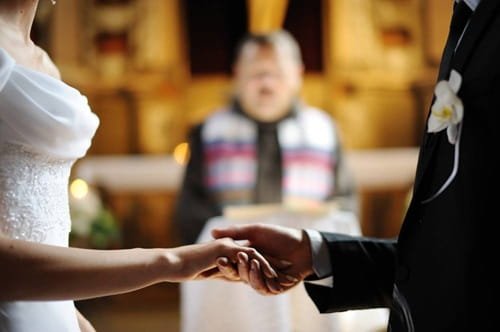
The Indian Christian Marriage Act, 1872 is the primary law governing Christian marriages. Under this Act, a church marriage is legally valid when: at least one party professes the Christian religion; the groom is at least 21 and the bride at least 18 years old; consent is free and voluntary; at least two witnesses are present; and the ceremony is conducted by a minister of religion or licensed marriage performer.
The marriage certificate issued by the church – signed by the minister, parties, and witnesses and recorded in the church register – is significant legal evidence of the solemnised marriage. State governments can license ministers to solemnize marriages under the Act.
The Critical Condition: Both or One Party Must Be Christian
The most important limitation: a church marriage under the Indian Christian Marriage Act is legally valid only when at least one party professes the Christian faith. If both parties are non-Christian (e.g., both Hindu), a church ceremony has no legal validity under this Act.
If a Hindu and a Christian wish to marry: a church ceremony alone without the Hindu converting to Christianity will not give legal recognition under the Christian Marriage Act. Their legally valid path is the Special Marriage Act, 1954, which enables inter-religious marriages without conversion.
Registration vs. Solemnisation
Indian marriage law distinguishes between solemnisation (the ceremony) and civil registration (the official government record). A church certificate evidences solemnisation. Civil registration with the Marriage Registrar (SDM) provides the government-recognised certificate accepted by all authorities.
The Supreme Court in Seema v. Ashwani Kumar (2006) directed compulsory registration of all marriages for their legal benefits. For practical purposes – passport applications, visa, inheritance, name change – the government-issued registration certificate is more universally accepted. Obtain both: the church certificate and civil registration.
What the Church Certificate Can Be Used For
A church marriage certificate issued under the Indian Christian Marriage Act by a licensed minister is accepted for: passport applications (as proof of marriage); name change on Aadhaar, PAN, and other documents; insurance nominations; inheritance claims; and matrimonial legal proceedings. However, many government agencies specifically require the government-issued SDM marriage certificate rather than the church certificate alone.
The practical recommendation: always complement the church ceremony with civil registration under the Christian Marriage Act or the Special Marriage Act (for inter-faith couples) to obtain the government Marriage Certificate.
Final Thought
A church marriage certificate is legally valid in India when both parties are Christian, the ceremony was performed by a licensed minister under the Indian Christian Marriage Act 1872, proper witnesses were present, and registration requirements were met. For maximum legal security, complete civil registration through the Marriage Registrar in addition to the church ceremony. For inter-religious marriages, register under the Special Marriage Act 1954 – the SMA certificate is the legally conclusive document for all purposes.
Frequently Asked Questions (FAQs)
Q1. Is a church marriage valid without civil registration?
A church marriage is legally solemnised under the Indian Christian Marriage Act without separate civil registration, provided both parties are Christian and all Act requirements are met. However, civil registration provides the government-recognised marriage certificate accepted by all authorities. The Supreme Court has directed compulsory registration. In practice, always register with the SDM or Marriage Registrar in addition to the church ceremony for full legal utility.
Q2. Can a Hindu get married in a church in India?
A Hindu cannot be married under the Indian Christian Marriage Act without first converting to Christianity. However, a Hindu and a Christian can have a church blessing ceremony and register their marriage under the Special Marriage Act, 1954, which allows inter-religious couples to marry without religious conversion. The SMA registration gives full legal recognition regardless of any religious ceremony.
Q3. What documents are needed to register a church marriage with civil authorities?
Typically required: application form signed by both parties; proof of age and address for both; passport-size photographs; the church marriage certificate signed by the minister; marriage invitation card if available; a certificate from the minister confirming the ceremony; and an affidavit by both parties confirming their marital status and free consent.
Q4. Is the church certificate accepted for passport applications?
Church marriage certificates are generally accepted by Passport Seva Kendras as supporting evidence. However, many offices prefer or require the government-issued SDM marriage certificate. To avoid complications, obtain both the church certificate and government registration certificate before applying for passport-related matters.
Q5. Can two Hindus get legally married in a church ceremony?
Two Hindus cannot have a legally recognised marriage under the Indian Christian Marriage Act – that Act requires at least one party to be Christian. For two Hindus who want a church blessing as part of their marriage celebration, they should first conduct a valid Hindu marriage under the Hindu Marriage Act 1955 with proper Saptapadi rituals, then register it with civil authorities, and separately attend a church for a blessing ceremony. The church blessing in this case has spiritual significance but no independent legal standing.