Whether you have a breakdown on the highway or need to move a non-functional vehicle, towing one car with another is a practical solution. India does have specific legal rules governing this under the Rules of the Road Regulations, 1989 (issued under the Motor Vehicles Act, 1988). Towing is permissible under specific, well-defined conditions — but towing without following these rules is a traffic violation and creates insurance and liability risks. This article explains the complete legal framework for towing one vehicle with another in India.
The Governing Law: Rules of the Road Regulations, 1989 — Rule 20
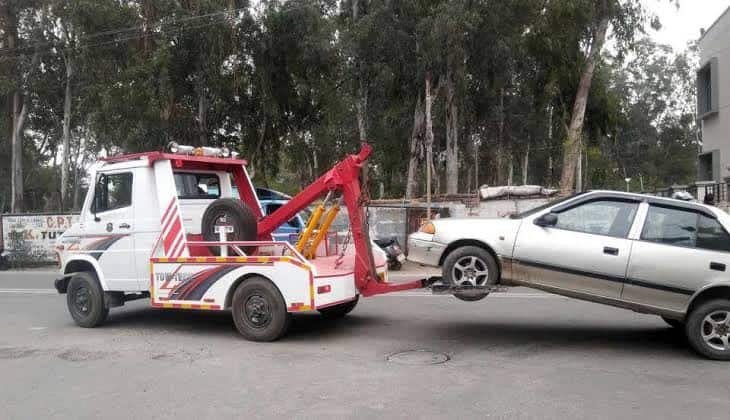
Rule 20 of the Rules of the Road Regulations, 1989 is the specific provision governing towing between motor vehicles. Its key provisions: Sub-rule (1): No vehicle shall be drawn or towed by any other motor vehicle unless: the towed vehicle is a mechanically disabled motor vehicle (i.e., it cannot move on its own due to mechanical failure); or it is an incompletely assembled motor vehicle; a registered trailer; or a sidecar; or the towing is for the purposes of delivery and to the nearest filling station or garage. This sub-rule makes clear that towing is only permitted in specific emergency/delivery situations — not for routine transport of functional vehicles simply because it is convenient. Sub-rule (2): The towed vehicle requires a licensed driver in the driver’s seat OR the steering wheels of the towed vehicle must be firmly and securely raised off the road surface by a crane or lifting device on the towing vehicle. Sub-rule (3): The clear distance between the rear of the towing vehicle and the front of the towed vehicle must never exceed five metres. Sub-rule (4): The towing vehicle must not be driven at a speed exceeding 24 kilometres per hour. Sub-rule (5): The tow rope or chain must be clearly visible and the towed vehicle must display an ‘ON TOW’ sign in white text on a red background.
Key Requirements in Plain Language
Driver in towed vehicle: If you tow with a rope or chain (rather than lifting the front wheels), someone holding a valid driving licence must sit in the driver’s seat of the towed vehicle to operate the steering and brakes. This is essential for safety — without steering and braking control in the towed vehicle, any unexpected event can cause the towed car to jackknife or create a multi-vehicle accident. Maximum towing speed: 24 km/h — approximately 15 mph. This is very slow and requires driving on the shoulder or emergency lanes on highways where possible, or on roads with slower traffic. Maximum distance between vehicles: 5 metres. A tow rope longer than 5 metres is not permitted. A shorter, taut rope is safer and legally required. ON TOW sign: The towed vehicle must display a clearly visible ‘ON TOW’ sign (red background, white text). This alerts other road users to the situation.
Who Can Perform Towing: Licensing and Commercial Aspects
For commercial towing services (operating a tow truck business, providing recovery services on highways, removing illegally parked vehicles for the police), a specific authorisation and licence from local/state authorities is required under the Motor Vehicles Act. Commercial tow truck operators need: motor carrier permit; vehicle fitness certificate for the tow truck; trained operators; and insurance covering both the tow truck and any vehicle being towed. For personal/emergency towing (one car owner towing another’s car to a garage), the specific commercial licensing requirement does not apply — but the Rules of the Road requirements (speed, distance, driver, sign) still apply fully.
Insurance Implications of Towing
If you tow a car with another car and an accident occurs: the towing vehicle’s insurance covers the towing vehicle under its standard policy (vehicle in use for its registered purpose). The towed vehicle’s insurance: damage to the towed vehicle during towing may be covered under own-damage insurance, but claims can be complicated if the towing was not performed in a standard or legally compliant manner. Damage to third parties caused by the towing combination: the towing vehicle’s third-party liability insurance covers this. Always: inform your insurer if you are towing (some policies require notification); ensure both vehicles have valid insurance; retain documentation of the breakdown situation (photos, mechanic’s certificate) to support any insurance claim.
Traffic Police Towing: Your Rights
Traffic police and municipal authorities have power to tow illegally parked vehicles under Sections 127 and 201 of the Motor Vehicles Act. Key citizen rights when police tow your vehicle: The vehicle can only be towed if it is causing obstruction to traffic flow (Mumbai High Court held in a PIL that non-obstructing vehicles cannot be towed). Police must photograph the vehicle before towing (failure to do this is procedurally irregular). A written panchnama is required. Towing charges must be fair and published. You are entitled to pay the challan and towing charges on the spot to prevent or reverse towing. The towing contractor is liable for any damage to your vehicle during towing — you can claim compensation. The Mumbai High Court (in PIL WP 2695/2005) specifically found systemic irregularities in towing operations and directed strict procedural compliance.
Final Thought
Towing one car with another in India is legal under specific conditions: the towed vehicle must be mechanically disabled; there must be a licensed driver in the towed vehicle (or the front wheels must be lifted off the ground); speed must not exceed 24 km/h; the tow rope/chain must not exceed 5 metres; and the ‘ON TOW’ sign must be clearly displayed. These rules exist for good safety reasons — emergency towing on Indian roads without proper precautions creates significant accident risk. For regular vehicle transport (moving a functional vehicle between locations), use a professional carrier/transporter rather than towing, as towing is legally restricted to emergency situations.
Frequently Asked Questions (FAQs)
Q1. Can I tow an automatic car with a rope in India?
Towing an automatic car with a rope is particularly risky and should be done with extreme care. Many automatic transmissions are damaged if the driven wheels are on the ground during towing when the engine is off — the transmission pump is engine-driven and without engine running, internal parts are not lubricated during towing. For automatic cars: either use a flatbed truck (safest); or if rope-towing, ensure the engine is running in neutral (on some automatic cars this is permissible for short distances at low speed — check the owner’s manual). The Rules of the Road requirements (5-metre distance, 24 km/h, driver in towed vehicle, ON TOW sign) apply equally to automatic and manual cars. Damage to the transmission caused by improper towing is typically not covered by insurance.
Q2. What is the legal maximum towing speed in India?
Rule 20(4) of the Rules of the Road Regulations, 1989 specifically limits towing speed to 24 kilometres per hour maximum. This is approximately 15 mph — a very low speed that requires use of the leftmost lane, hazard lights on both vehicles, and extra caution. At 24 km/h on a highway or busy road, you create a slow-moving hazard — ensure you are on the shoulder or emergency lane wherever possible, use hazard lights, and if traffic conditions make 24 km/h genuinely dangerous (highway where minimum speed is higher), get professional help rather than attempting the tow.
Q3. Do both cars need insurance when towing?
Both vehicles should have valid insurance. The towing vehicle’s third-party insurance covers any damage to third parties (other vehicles, pedestrians) caused by the towing combination. The towed vehicle’s own-damage insurance covers damage to the towed vehicle itself — but claims may be subject to scrutiny if towing was not performed correctly. From a practical risk management standpoint: never attempt emergency towing of a high-value car without professional help — the risk of damage (especially to automatic transmissions and front-wheel-drive cars) outweighs the cost of a professional flatbed carrier.
Q4. Can the police tow my car without informing me?
Under Sections 127 and 201 of the Motor Vehicles Act, traffic police can tow vehicles causing obstruction. However, the Mumbai High Court has specifically ruled that: the vehicle must actually be causing obstruction (not just parked in a no-parking zone in a non-obstructing manner); police must photograph the vehicle before towing; a panchnama is required; and the owner must be able to retrieve the vehicle immediately upon payment of challan and towing charges. If your car was towed without proper documentation or was not obstructing traffic, you can challenge the towing and claim compensation for any damage caused during the towing process.
Q5. Is towing a two-wheeler behind a car legal?
Towing a motorcycle or scooter behind a car is possible under the same Rules of the Road framework — the two-wheeler must be mechanically disabled, and the Rules’ requirements (5-metre limit, 24 km/h speed, ON TOW sign, and a person controlling the towed vehicle or its wheels lifted off the ground) apply. Practically, towing a two-wheeler with a rope behind a car is quite dangerous as two-wheelers are unstable and can easily tip. A better option: use a motorcycle carrier rack (hitch-mounted or trailer type) which lifts the motorcycle and secures it properly on an approved carrier. This is safer and more reliably compliant with the Petroleum Rules’ vehicle transport provisions.


