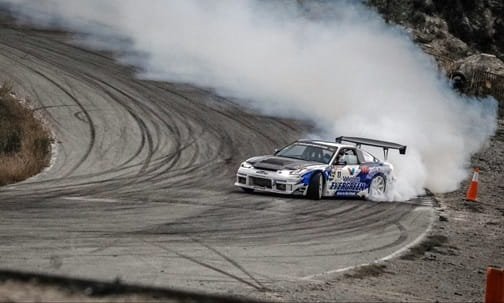
Drifting — the art of deliberately oversteering a car to make the rear wheels lose traction and slide sideways through a corner — became a cultural phenomenon thanks to movies and motorsport events. In India, the drift scene is growing, and with it comes a very important question: is it actually legal?
The short answer is: it depends entirely on where you do it.
Drifting on Public Roads: Clearly Illegal
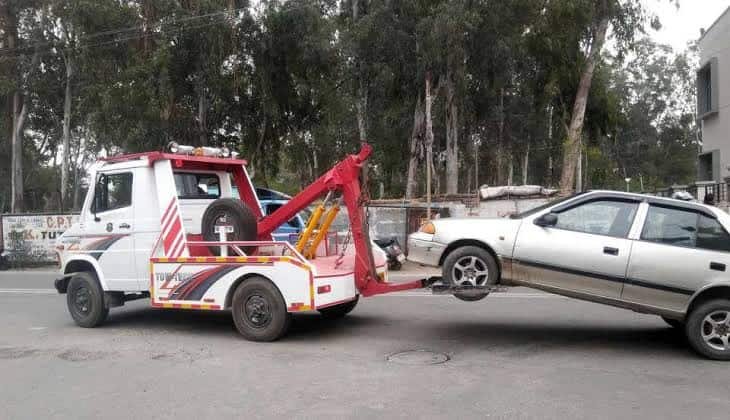
Drifting on public roads in India is illegal. Plain and simple. The Motor Vehicles Act, 1988, and its 2019 Amendment have clear provisions against rash and negligent driving. Performing stunts like drifting on a public road endangers other motorists and pedestrians and is treated as a serious traffic violation.
In a recent and widely-shared incident from 2025, a driver drifting a Mercedes-Benz at a Noida intersection was fined ₹54,500 for the stunt — despite no accidents occurring. The fine was imposed under multiple sections of the Motor Vehicles Act. This case serves as a clear reminder that skill or intentions do not shield you from legal consequences on a public road.
Drifting at a Racetrack: Completely Legal
The good news for enthusiasts is that drifting is entirely legal when done at a dedicated racetrack or drift facility. India has several options for this, including the Buddh International Circuit in Greater Noida, Madras Motor Race Track (MMRT) in Chennai, Kari Motor Speedway in Coimbatore, and local go-kart tracks and drift pads in major cities.
These venues provide a controlled, safe environment where you can practice and perfect your drifting skills without putting others at risk or breaking any law. Organised drift events and competitions are also held regularly at these tracks.
The Legal Framework: What Sections Apply?
If police catch you drifting on a public road, they can invoke Section 184 of the Motor Vehicles Act for dangerous driving, Section 189 for racing and trials of speed on public ways, and relevant provisions under the Bharatiya Nyaya Sanhita (BNS), 2023 for causing public nuisance or endangerment. These offences carry fines, and in serious cases, the driver’s licence can be suspended or cancelled.
Is Drifting a Sport in India?
Yes! Drifting is gaining recognition as a motorsport in India, with events being organised by various clubs and associations. The Federation of Motor Sports Clubs of India (FMSCI) governs motorsport in the country and sanctions events at approved venues. As the sport grows, it is increasingly drawing younger enthusiasts who are approaching it responsibly through proper channels.
Final Thought
Drifting itself is not a crime. It is a skill, an art form, and for many a passion. The law simply insists that you pursue it in the right place. A racetrack is your playground; a public road is not. If you love drifting, join a club, book a track, gear up properly, and enjoy the sport the way it was meant to be enjoyed — safely and legally.
Frequently Asked Questions (FAQs)
Q1. What is the fine for drifting on a public road in India?
Fines can vary based on the sections invoked, but can run into tens of thousands of rupees. A recent case in Noida saw a fine of ₹54,500 issued for drifting a car at a public intersection. Repeated offences can also lead to licence suspension.
Q2. Can I be arrested for drifting on a public road?
Yes, in serious cases. If the act is deemed to constitute dangerous or rash driving causing threat to public safety, police can register a case under the Motor Vehicles Act or the Bharatiya Nyaya Sanhita, 2023, which may involve arrest.
Q3. Are there legal drift tracks in India?
Yes. Venues like Buddh International Circuit, Madras Motor Race Track, and Kari Motor Speedway offer track time for car enthusiasts including drifting. Local go-kart tracks also sometimes host drift sessions. Always book in advance and follow safety requirements.
Q4. Does modifying my car for drifting affect its legal road status?
It can. Modifications like welding the differential or engine upgrades beyond manufacturer specifications require RTO approval under the Motor Vehicles Act. Unapproved modifications can result in the vehicle’s registration being cancelled or insurance becoming void.