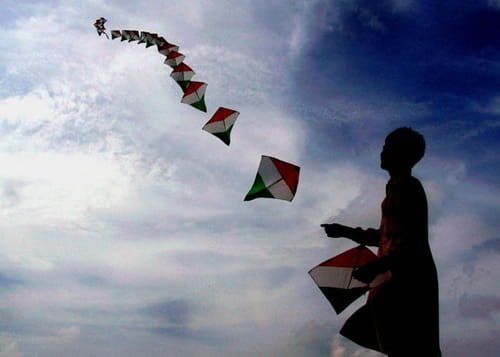
Kite flying is one of India’s most beloved cultural activities, especially during Makar Sankranti, Uttarayan, Basant Panchami, and Independence Day. Millions of Indians fly kites every year without incident. But there is a surprising legal technicality: the Aircraft Act of 1934 technically classifies kites as aircraft, making unlicensed kite flying a potential statutory violation. More importantly, the use of dangerous synthetic kite strings (manjha) is a serious criminal matter that has caused dozens of deaths. Here is everything you need to know.
The Aircraft Act 1934: The Technical Illegality Nobody Enforces
The Indian Aircraft Act, 1934 defines “aircraft” broadly as any machine that can derive support in the atmosphere from the reactions of the air. Under this expansive definition, kites technically qualify as aircraft. Section 11 of the Act (amended in 2008) states that whoever wilfully flies an aircraft in a manner that causes danger to any person or property shall be punished with imprisonment up to two years or fine up to Rs 10 lakh.
The practical reality: the Act is never enforced against ordinary kite flyers for the simple act of kite flying. Its intent is to regulate powered aircraft and ensure safe use of airspace. The Delhi High Court has affirmed that kite flying is an important cultural activity and should not be banned entirely. The focus of the law is on safety, not on prohibiting cultural recreation.
However, the technicality means that: kite flying near airports (within designated no-fly zones) is strictly regulated; kite flying that causes injury or death to another person can attract criminal and civil liability under the Aircraft Act; and kite flying that endangers aircraft can lead to serious prosecution.
Airport No-Fly Zones: A Real Restriction
Near airports, kite flying is a genuine safety hazard that is actively enforced. The Airports Authority of India (AAI) and DGCA (Directorate General of Civil Aviation) designate no-fly zones around airports. Kite flying within these zones without AAI permission is illegal and can attract: fines under aviation regulations; charges under Section 11 of the Aircraft Act (up to Rs 10 lakh fine or 2 years imprisonment); and serious consequences if a kite causes a bird-strike-type incident with an aircraft.
Many urban festivals like Independence Day kite flying happen in cities with airports nearby. Always check the AAI-published no-fly zone maps for your city before flying kites during festivals. The zones typically extend several kilometres from airport runways.
The Chinese Manjha Ban: A Real Law with Real Penalties
The most important kite flying law in India is not about kites themselves but about the strings used. Chinese manjha – synthetic thread coated with glass powder, metal, or other abrasives – has been responsible for dozens of deaths annually across India. Riders on two-wheelers have had their throats slit by low-hanging manjha strings. Children have been struck in the neck. A 2025 AIIMS study published in a medical journal documented a near-decapitation of a 17-year-old motorcyclist from a manjha-related injury.
The National Green Tribunal (NGT) banned Chinese manjha in 2017 under the Environment Protection Act, 1986. The ban covers the manufacture, sale, storage, purchase, and use of synthetic kite thread coated with glass or metal. Penalties: fine up to Rs 1 lakh and imprisonment up to 5 years. Despite the ban, it remains widely available underground and enforcement is inconsistent.
Multiple states have reinforced the ban with state-specific notifications: Delhi, Uttar Pradesh, Rajasthan, Gujarat, Tamil Nadu, and many others have issued bans through their pollution control boards. Goa banned all non-cotton kite strings after PETA India lobbied for bird protection, as glass-coated strings kill and injure thousands of birds annually.
Criminal Liability for Kite Flying Injuries
If your kite string causes injury or death to another person, you face criminal and civil liability under: BNS provisions for causing hurt or death by reckless conduct; the Aircraft Act for endangering safety; and civil tort claims for negligence. Multiple criminal cases have been registered against kite festival organizers and individuals whose strings caused deaths.
Safe string alternatives: plain cotton string is the legally compliant and safest option; nylon strings without coatings are generally permitted in states that have not banned all synthetic strings. These do not have the cutting properties of glass-coated manjha.
Final Thought
Kite flying is effectively legal in India for cultural and recreational purposes, despite the technical Aircraft Act classification. Nobody is prosecuted for ordinary kite flying. However: do not fly near airports or in designated no-fly zones; never use glass-coated or metal-coated synthetic manjha (Chinese manjha) – this is banned by the NGT with criminal penalties; use only plain cotton string; fly in open spaces away from power lines and roads; supervise children; and be aware that if your kite string injures someone, you face criminal and civil liability. Celebrate India’s kite culture responsibly – the tradition deserves to continue safely without the preventable tragedies that sharp manjha causes every year.
Frequently Asked Questions (FAQs)
Q1. Is kite flying completely banned in India?
No. Kite flying is not banned in India. It is a celebrated cultural tradition enjoyed by millions during Makar Sankranti, Uttarayan, Basant Panchami, and Independence Day. The Aircraft Act technically classifies kites as aircraft requiring a licence, but this provision has never been enforced against ordinary recreational kite flyers. The relevant restrictions are: no-fly zones near airports (strictly enforced); banned synthetic glass-coated manjha strings (strictly prohibited by NGT 2017); and liability for injuries caused by kite strings.
Q2. What is Chinese manjha and why is it banned?
Chinese manjha is synthetic kite thread (typically nylon or polyester) coated with glass powder, metal, or other abrasive materials. It is razor-sharp and has a breaking strength much higher than traditional cotton string. When low-hanging in the air (especially across roads), it can slice through exposed skin with potentially fatal consequences for motorcyclists. Dozens of deaths and thousands of injuries are documented annually from manjha incidents. The NGT banned it in 2017 under the Environment Protection Act. Penalties: fine up to Rs 1 lakh and imprisonment up to 5 years. The ban covers manufacture, sale, storage, purchase, and use.
Q3. Can I fly kites on Independence Day (August 15)?
Yes, but check restrictions in your city. Many state capitals and cities near airports have specific restrictions during Independence Day celebrations due to aviation safety concerns and historical incidents. Delhi has particularly strict regulations due to multiple airports and sensitive air space. Check with your local municipal corporation, state police, and AAI for any specific orders. Use only plain cotton string, fly well away from airports, power lines, and roads, and supervise children at all times.
Q4. What should I do if I find someone using banned manjha?
Report to local police, state pollution control board, or district administration. Possession and sale of Chinese manjha is a criminal offence under the NGT ban and the Environment Protection Act. If you see shops openly selling manjha, file a complaint with the police specifying the shop location and owner details. Many state police departments have special WhatsApp complaint numbers and social media handles during Makar Sankranti season for reporting manjha violations.
Q5. Am I liable if my kite string injures someone?
Yes. If your kite string injures another person, you can face: criminal charges for causing hurt or grievous hurt by reckless conduct under BNS; charges under the Aircraft Act for endangering safety; and civil tort liability for negligence. If manjha is involved and someone dies, homicide by negligence charges under BNS Section 304A may apply. Using banned synthetic manjha that kills someone could elevate charges further. This is why using only legal plain cotton string and flying in appropriate open spaces is not just a moral obligation but a legal one.