The idea of packing your life into a mobile home and hitting the road is deeply romantic. Caravans, motorhomes, and camper vans are wildly popular in the West, and in recent years India has seen a growing community of road-trippers and van-lifers embracing this lifestyle. But if you are considering a caravan in India, the legal landscape requires careful navigation.
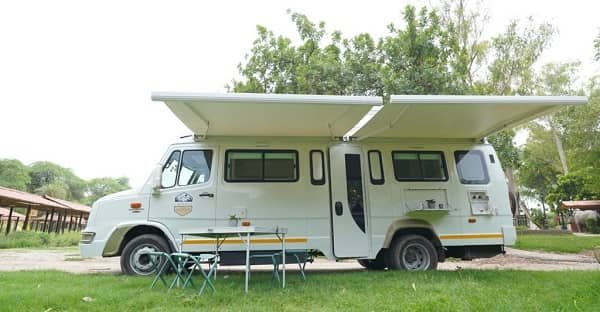
Are Caravans Legal in India?
Yes — owning and travelling in a caravan or motorhome is legal in India, but it must be properly registered and compliant with applicable vehicle standards. Commercially manufactured motorhomes are required to comply with AIS-124, India’s Automotive Industry Standard for recreational vehicles, which has been in effect since April 2018. Factory-built caravans meeting these standards can be registered with the RTO as ‘motor caravans’.
DIY Conversions: A Complex Area
Many enthusiasts convert standard vehicles — vans, SUVs, or tempo travellers — into camper vans. This is not automatically illegal, but any permanent modification such as installing a fixed bed, kitchen unit, or electrical system counts as a ‘vehicle alteration’ under the Motor Vehicles Act and requires RTO approval and an update to the Registration Certificate.
Failing to get the RC updated after converting a vehicle into a camper van can lead to fines or vehicle seizure. The vehicle must pass safety and emission standards after conversion.
Caravan Tourism: Government Encouragement
The Indian government has been actively promoting caravan tourism as a way to unlock offbeat destinations. States like Goa, Maharashtra, Kerala, Himachal Pradesh, and Karnataka have launched caravan tourism policies that create designated parks, simplify approvals, and offer incentives to operators.
Under Goa’s Caravan Tourism Policy, registered caravans can be used commercially at identified scenic circuits, beaches, forts, and heritage sites. Similar policies are being developed in other states, making it an exciting time for the caravan tourism industry.
Where Can You Park and Camp Overnight?
This is the most practically complex part. You cannot park a caravan just anywhere. Public roads and religious sites generally prohibit overnight stays. Forests and protected areas have restrictions. Overnight stays are legally permitted at designated caravan parks, private farmland with the owner’s permission, and campsite facilities registered with state tourism departments.
Final Thought
Caravanning in India is legal, growing, and increasingly supported by government policy. Whether you are buying a factory-built motorhome or converting your existing vehicle, the key is to ensure it is properly registered, RTO-approved, and compliant with AIS-124 standards. The road is open — but paperwork comes first.
Frequently Asked Questions (FAQs)
Q1. Do I need a special licence to drive a motorhome in India?
For motorhomes within standard vehicle weight limits, a regular driving licence is sufficient. However, if the vehicle exceeds 7.5 tonnes or is used for commercial caravan tourism, a transport vehicle licence may be required. Always check with your local RTO for specific requirements.
Q2. Can I convert my van or SUV into a camper van legally?
Yes, but the conversion must be approved by the RTO and your RC must be updated to reflect the changes. Permanent modifications like installing beds or a kitchen require filing the appropriate forms and passing a vehicle inspection.
Q3. Is it legal to park a caravan on the side of the road overnight?
Generally no. Overnight parking on public roads is not permitted for extended stays and can attract police action. Use designated caravan parks, registered campsites, or private land with the owner’s consent.
Q4. Are there caravan parks in India?
Yes, and they are growing. States like Goa, Kerala, and Himachal Pradesh have developed caravan parks as part of their tourism policies. More are expected to come up as caravan tourism gains popularity. Checking with state tourism departments before your journey is advisable.