Getting a work visa for Japan usually starts with securing a job that fits one of Japan’s recognized work-authorized residence statuses. Unlike a general permit that allows a foreign worker to take any job, Japan normally connects a person’s permission to work with a specific category of professional activity. An IT engineer, language specialist, university professor, skilled worker, and employee transferred by an international company may therefore use different immigration categories.
For someone applying from outside Japan, the process commonly involves finding qualifying employment, determining the correct status of residence, obtaining a Certificate of Eligibility in Japan, applying for a visa through a Japanese diplomatic mission, and completing immigration inspection when entering Japan.
Step 1: Determine Which Work Category Fits Your Job
Japan has several residence statuses that permit employment. The appropriate category depends primarily on what you will actually do in Japan.
One widely used category is Engineer/Specialist in Humanities/International Services. Depending on the position and qualifications, it can cover work in areas such as engineering, IT, business, translation, international services, and other professional fields.
Other work-authorized categories exist for professors, highly skilled professionals, intra-company transferees, skilled labor, medical professionals, entertainers, journalists, and other qualifying workers.
Japan also has a Specified Skilled Worker system for eligible workers in designated industries.
You cannot simply choose a category because it appears convenient. Your qualifications, employer, job duties, and other conditions must satisfy the requirements of the particular residence status.
Step 2: Find a Qualifying Job in Japan
For many people, finding employment is the practical starting point.
A Japanese company or another qualifying organization generally needs to offer you work that fits an appropriate residence status.
This makes the job itself important.
For example, someone applying under a professional category cannot necessarily take an unrelated position simply because a Japanese employer is willing to hire them.
Your educational background, professional experience, proposed duties, and other qualifications can be considered when immigration authorities determine whether the position fits the requested status.
Applicants should therefore make sure the job description accurately reflects the work they will actually perform.
Step 3: Check the Qualification Requirements
The requirements vary according to the residence status.
Some professional categories consider relevant university education or qualifying professional experience. Other categories have specialized standards.
Specified Skilled Worker applicants, for example, can be required to demonstrate occupational skills and Japanese-language ability under the rules applying to their sector and classification.
Not every Japanese work category has one universal Japanese-language requirement.
A software engineer working for an international technology company may face different immigration requirements from a worker applying through the Specified Skilled Worker system.
Employers can also establish their own language requirements even when immigration rules do not require a particular test for that position.
Step 4: Apply for a Certificate of Eligibility
For someone planning a long-term stay in Japan for employment, obtaining a Certificate of Eligibility (COE) is generally an important part of the process.
The COE is issued through Japan’s Immigration Services Agency after examining whether the proposed activities satisfy requirements for the requested residence status.
In an employment case, a representative of the receiving organization in Japan can commonly submit the COE application.
The required documentation depends on the residence category.
Information may be needed about the applicant’s qualifications, proposed employment, employer, compensation, and other circumstances.
The Certificate of Eligibility process takes place before the visa application in the usual overseas employment route.
Step 5: Receive Your Certificate of Eligibility
If the application is approved, a Certificate of Eligibility is issued.
A COE makes the subsequent visa and entry process more straightforward because Japanese immigration authorities have already examined important aspects of the proposed activities.
However, receiving a COE is not the same as receiving a work visa, and it does not guarantee admission to Japan.
The applicant still needs to complete the applicable visa process.
Electronic Certificates of Eligibility can also be used under Japan’s current procedures, so an applicant may not necessarily need to wait for an original paper certificate to arrive internationally.
Step 6: Apply for Your Japanese Work Visa
After obtaining the COE, the applicant generally applies for a visa through the Japanese embassy, consulate, consular office, or another application channel authorized for the applicant’s place of residence.
Requirements vary depending on the location and visa category.
Applicants generally need a valid passport, visa application materials, information concerning the Certificate of Eligibility, and any other documents requested for their circumstances.
The diplomatic mission reviews the visa application separately from the COE process.
Applicants should provide accurate information throughout both stages because inconsistencies can create delays or additional questions.
Step 7: Wait for the Visa Decision
Processing time depends on the circumstances.
When all requirements are satisfied and no additional examination is necessary, an application supported by a Certificate of Eligibility can generally be processed much more efficiently than a long-term visa application made without one.
Additional documents or examination can extend the process.
For that reason, workers should avoid assuming that a planned starting date is guaranteed before the immigration procedures are complete.
After approval, the visa is placed in or otherwise associated with the applicant’s travel documentation according to the applicable procedure.
Step 8: Enter Japan and Receive Landing Permission
Receiving the visa does not complete the immigration process.
The visa allows you to travel to Japan and request entry.
At the port of entry, an immigration officer conducts the landing examination. If admission is approved, you receive landing permission, which establishes your status of residence and authorized period of stay.
This distinction is important.
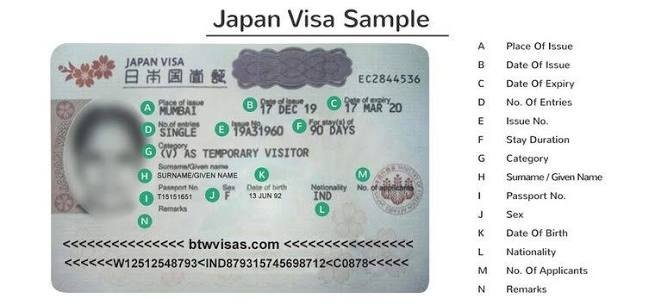
Your visa is primarily connected with entering Japan, while your status of residence determines the activities you are permitted to perform after entering.
Eligible mid- to long-term residents also receive a residence card, either at entry through designated airports or through the applicable procedure afterward.
Can You Work Anywhere After Receiving a Work Visa?
Generally, your work must remain within the activities permitted by your status of residence.
Having a residence card does not automatically authorize every type of employment.
For example, someone admitted under a professional engineering or international-services category should not assume they can freely switch to completely unrelated work.
If the new position remains within the activities permitted by the existing residence status, changing employers may be possible without obtaining an entirely new status. However, required notifications and immigration procedures can still apply.
If the new work falls under a different residence category, a change of status may be necessary.
Can You Bring Your Family to Japan?
Some foreign workers can bring qualifying family members to Japan under an appropriate dependent status.
Eligibility depends on the principal worker’s residence status and the family relationship.
A dependent residence status does not automatically provide unrestricted permission to work.
A dependent who wants to take paid employment may need separate permission, and restrictions can apply to the amount or type of work permitted.
Can a Japanese Work Visa Lead to Permanent Residence?
Working in Japan does not automatically result in permanent residence.
However, qualifying foreign residents may eventually become eligible to apply for permanent residence after satisfying the applicable residence, conduct, financial, and other requirements.
Highly skilled foreign professionals can have different pathways and potentially shorter qualifying periods when they meet the relevant standards.
Permanent residence is a separate immigration status and requires its own application and approval.
FAQs
Q1. Do I need a job offer to get a work visa for Japan?
A: For many common employment-based routes, you generally need qualifying employment or another qualifying professional arrangement in Japan that fits the requested status of residence.
Q2. What is a Certificate of Eligibility in Japan?
A: A Certificate of Eligibility shows that Japanese immigration authorities have conducted a preliminary examination and determined that the proposed activities meet requirements for the relevant residence status. It supports the subsequent visa and entry process.
Q3. Do I need to speak Japanese to get a work visa?
A: Not every employment category has the same Japanese-language requirement. Some routes, including parts of the Specified Skilled Worker system, have language requirements, while employers may separately require Japanese proficiency for particular jobs.
Q4. Can I change jobs after getting a Japanese work visa?
A: Potentially. If the new job falls within the activities permitted by your existing residence status, changing employers may be possible, although notification or other procedures may apply. A substantially different occupation may require a change of status.
Q5. Is a Japanese work visa the same as permanent residence?
A: No. Employment-based residence status allows qualifying work for an authorized period. Permanent residence is a separate status with different eligibility requirements and a separate application process.