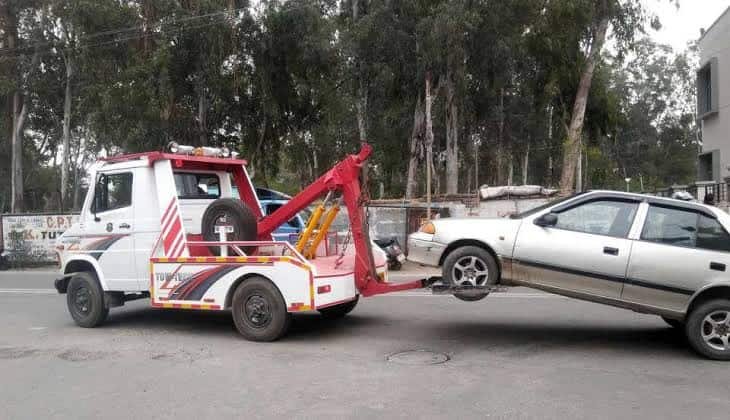
RTA stands for Regional Transport Authority. It is a statutory government body constituted under the Motor Vehicles Act, 1988 that manages and regulates all transport-related matters within a specific region or district of India — including vehicle registration, driving licences, road permits, route assignments for public transport, and enforcement of transport laws.
Every state in India has multiple RTAs, each covering a specific geographical territory. Collectively, they form the backbone of India’s road transport regulatory framework — ensuring that vehicles are legally registered, drivers are qualified and licensed, and transport operators comply with safety and legal requirements.
Functions and Powers of RTA
The RTA’s powers and functions span the full spectrum of road transport regulation:
Vehicle Registration Every motor vehicle must be registered with the RTA of the area where it is kept. The RTA issues the Registration Certificate (RC) — the legal document that identifies the vehicle and confirms its ownership. No vehicle can legally ply on public roads without valid registration.
Driving Licences The RTA (through the licensing officer) issues learner’s licences and permanent driving licences after testing candidates’ driving competence. It also maintains records of driving licence holders, records endorsements for violations, and suspends or cancels licences when warranted.
Route Permits for Commercial Vehicles This is one of RTA’s most important quasi-judicial functions. No commercial vehicle — bus, truck, taxi, auto-rickshaw — can operate on public roads without a valid permit granted by the RTA. The RTA grants:
- Stage Carriage Permits (for buses on specific routes)
- Contract Carriage Permits (for taxis, cabs)
- Goods Carriage Permits (for trucks)
- Tourist Vehicle Permits
Permit Suspension and Cancellation The RTA can suspend or cancel a vehicle’s permit if the operator violates permit conditions — operating on unauthorised routes, overloading, or violating safety norms.
RTA vs. STA — The Appeal Mechanism
| Feature | RTA | STA |
| Full Form | Regional Transport Authority | State Transport Appellate Tribunal |
| Level | District/Regional level | State level |
| Function | Grant/deny/suspend permits | Hear appeals against RTA decisions |
| Members | District-level officials | State-level judicial/administrative officers |
| Appeal From RTA | Decision challenged at STA | STA decision challenged at High Court |
Persons aggrieved by RTA decisions — refused permits, suspended registrations, cancelled licences — can appeal to the State Transport Appellate Tribunal (STAT), and further to the High Court.
RTA in the Digital Age — Parivahan Portal
India’s Ministry of Road Transport and Highways has digitalised most RTA services through the Parivahan portal (parivahan.gov.in):
- Online vehicle registration application
- Driving licence application and renewal
- Learner’s licence test (online, at government centres)
- Permit application and status tracking
- Vehicle fitness certificate tracking
- Pollution Under Control (PUC) certificate tracking
- Vehicle NOC for interstate transfer
This has significantly reduced the need for physical visits to RTA offices for routine services — though in-person verification remains necessary for licence tests and vehicle inspections.
RTA and Road Safety Enforcement
Beyond administrative functions, the RTA actively participates in road safety enforcement:
- Motor vehicle inspection — Ensuring vehicles meet safety standards
- Fitness certificates — Commercial vehicles need periodic fitness certification
- Overloading checks — Weight limits enforcement for goods vehicles
- Document verification — Checking insurance, PUC, and permit compliance
- Drunk driving enforcement — Coordination with traffic police
The Motor Vehicles (Amendment) Act, 2019 significantly enhanced penalties for traffic violations and strengthened the RTA’s enforcement capabilities.
Frequently Asked Questions (FAQs)
Q: What is the full form of RTA in law?
A: RTA stands for Regional Transport Authority — a statutory body under the Motor Vehicles Act, 1988 that manages vehicle registration, driving licences, transport permits, and road transport enforcement within a specific region.
Q: What is the difference between RTA and RTO?
A: RTA (Regional Transport Authority) is the statutory body. RTO (Regional Transport Office/Officer) is the physical office and the officer heading it. Both terms are often used interchangeably in common usage.
Q: What documents are needed for vehicle registration at RTA?
A: Key documents include the vehicle purchase invoice, insurance certificate, PUC certificate, identity proof, address proof, and chassis/engine number verification.
Q: Can I apply for a driving licence online?
A: Yes. The Parivahan portal (parivahan.gov.in) allows online application for learner’s licences and driving licences. The written test for learner’s licence can be taken online at government-designated centres.
Q: What is a Stage Carriage Permit?
A: A Stage Carriage Permit is a permit granted by the RTA to buses operating on specific routes — allowing them to pick up and set down passengers at intermediate stops along the designated route.
Q: How can I appeal against an RTA decision?
A: Decisions of the RTA can be challenged before the State Transport Appellate Tribunal (STAT). STAT decisions can be further challenged before the High Court.
Q: What is the validity of a vehicle fitness certificate?
A: For newly registered commercial vehicles, a fitness certificate is valid for 2 years. After that, it must be renewed annually.
Q: Does RTA have power to cancel driving licences?
A: Yes. Under the Motor Vehicles Act, the RTA (or the licensing authority) can suspend or cancel driving licences for traffic violations, medical unfitness, or on court orders.