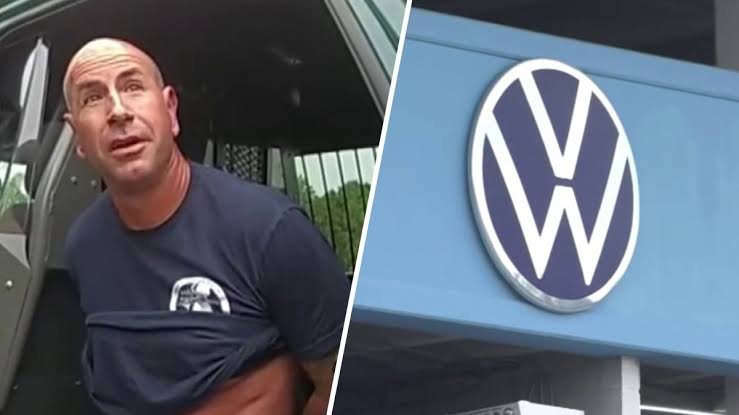
Buying a new truck is supposed to be a good day. For Shane Sprague, a 27-year veteran Chief Warrant Officer with the U.S. Coast Guard, it turned into a nightmare that started with a paperwork mistake and ended with him surrounded by armed deputies in a physical therapy parking lot. Now he’s suing the dealership that sold him the vehicle, and newly released bodycam footage is revealing exactly how a single clerical error spiraled into a police confrontation.
This case has drawn national attention not just because of what happened, but because of how preventable the entire situation turned out to be.
How the Trouble Started
Sprague purchased a 2024 GMC Sierra 1500 AT4X in Thunderstorm Gray from Doral Volkswagen in South Florida on June 21. He put down a $15,000 deposit, financed the rest, and traded in his previous vehicle, walking through what should have been a routine multi-hour dealership process. He signed his paperwork digitally and left with the truck and a USB drive containing his documents.
The problem, unknown to him at the time, traced back to the dealership’s finance department. A finance manager had entered the wrong VIN when processing the sale, accidentally linking Sprague’s license plates to an entirely different vehicle. That single data-entry mistake triggered the dealership’s system to flag his truck as unsold inventory, and it eventually led Doral Volkswagen to report the Sierra as stolen.
The Gunpoint Confrontation
Ten days after buying the truck, on July 1, Sprague was leaving a physical therapy appointment in Tamarac when an unmarked Ford F-150 rammed his rear bumper. Broward County Sheriff’s deputies then surrounded his vehicle with weapons drawn, ordering him out at gunpoint. Bodycam footage that later circulated online shows Sprague handcuffed, searched, and placed in the back of a patrol car, repeatedly asking officers what was happening without receiving an explanation.
Adding another layer of concern, Sprague’s role maintaining helicopters occasionally used by senior government officials means his security clearance specifically prohibits tracking devices on his personal vehicles. He never consented to any tracker being installed, yet the dealership’s mistaken stolen-vehicle report had activated the truck’s LoJack system regardless.
Detectives eventually contacted the dealership, confirmed Sprague was the legitimate owner, and released him. By that point, however, the truck had already been towed and was no longer in his possession.
What the Lawsuit Alleges
Sprague filed suit in Miami-Dade Circuit Court against Doral-VW, LLC, part of the publicly traded Lithia Motors auto group, seeking more than $50,000 in damages. The complaint accuses the dealership of negligence, false imprisonment, emotional distress, and violations of Florida’s consumer protection statutes.
His attorney, Ignacio Alvarez, has been blunt about where he believes responsibility lies, arguing that the dealership’s failure to perform basic due diligence before reporting a legitimately sold vehicle as stolen created a dangerous, entirely avoidable situation. Notably, no lawsuit has been filed against the Broward County Sheriff’s Office or the responding officers themselves, since Sprague’s legal team has focused responsibility squarely on the dealership’s internal error rather than how deputies responded to a report they had no reason to doubt.
The Dealership’s Response
Doral Volkswagen, through a Lithia Motors spokesperson, issued an apology shortly after the incident became public, describing it as an isolated occurrence caused by human error and stating it didn’t reflect the level of service the dealership aims to provide. The company said it was committed to working toward a resolution and remained in direct contact with Sprague.
That said, the dealership’s legal team has also moved to compel arbitration in the case, requesting that the dispute be resolved by a neutral third party outside of open court rather than through the traditional litigation process Sprague initially filed.
The New Bodycam Evidence
Months after the original incident went viral, attorney John H. Bryan released additional bodycam footage obtained through public records requests, offering a clearer picture of exactly how the chain of errors unfolded. That footage has reinforced Alvarez’s central argument: that a single mistake made by someone in the dealership’s finance department, someone with no direct role in verifying vehicle ownership, ultimately cascaded into an armed confrontation that put a decorated servicemember’s safety at risk.
The Personal Toll on Sprague
Sprague has spoken publicly about how the incident upended his life, describing the shift from being viewed as a respected 27-year Coast Guard veteran to receiving online messages accusing him of stealing his own truck. He canceled the purchase after the ordeal and recovered his deposit, but has since been driving a rental vehicle while the legal process plays out.
FAQs
Q1. Why hasn’t Shane Sprague sued the police department or the deputies involved?
His legal team has focused liability on the dealership, arguing that Doral Volkswagen’s paperwork error is what triggered the stolen vehicle report in the first place. Since the deputies were responding to what appeared to be a legitimate stolen vehicle alert, the case treats the dealership’s negligence as the root cause rather than police conduct.
Q2. What does it mean that the dealership wants to compel arbitration?
Arbitration moves a dispute out of the traditional court system and into a private resolution process overseen by a neutral third party, rather than a judge or jury. If granted, this could significantly change how the case proceeds and may limit the public visibility of future developments.
Q3. How did a VIN entry error actually cause a stolen vehicle report?
When the finance manager linked Sprague’s license plates to the wrong vehicle identification number, the dealership’s internal system likely treated the correctly sold truck as unaccounted-for inventory, which triggered the LoJack tracking system and led to a stolen vehicle report despite the truck being legitimately purchased and paid for.
Q4. Is Sprague seeking additional compensation beyond the $50,000 minimum stated in the complaint?
The lawsuit specifies damages of more than $50,000, which is largely a jurisdictional threshold required to bring the case in circuit court rather than a cap on what he could ultimately recover. The final amount, if the case proceeds to resolution, would depend on negotiations, arbitration, or a court’s assessment of his damages.


