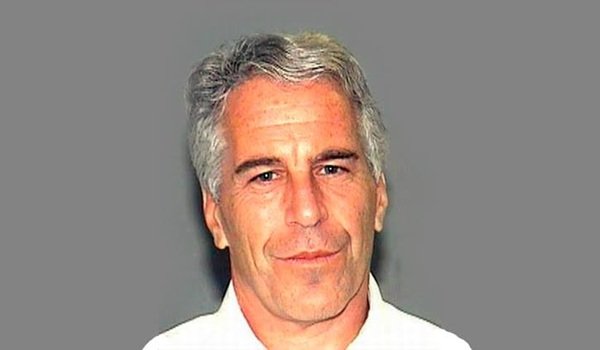
A previously unpublished booking photograph of Ghislaine Maxwell entered the public record in January 2026 as the U.S. Department of Justice released millions of pages, photographs and other materials connected to Jeffrey Epstein investigations. The image itself dated from Maxwell’s 2020 arrest, not a new 2026 arrest. Its publication came years after a federal jury convicted Maxwell of offenses connected with recruiting and grooming underage girls for Epstein, and after she received a 20-year federal prison sentence.
Because the release occurred amid enormous interest in Epstein-related records, the photograph was sometimes presented in isolation. An accurate account should explain both its original purpose—as a custody identification image—and its later inclusion in the federal disclosure. It should also separate established convictions from untested assertions appearing elsewhere in the released files.

Maxwell’s July 2020 arrest
Federal authorities arrested Maxwell in New Hampshire on July 2, 2020, after prosecutors in the Southern District of New York charged her in connection with Epstein’s abuse of minors. The booking record reportedly contained identifying information, a charge list and front-facing images taken at intake.
The photograph did not become widely available at the time of arrest. That explains why a ‘new’ Maxwell mugshot appeared in headlines in 2026 even though the underlying picture was more than five years old.
The criminal conviction
A federal jury convicted Maxwell in December 2021 on charges tied to helping Epstein exploit underage girls. In June 2022 she was sentenced to 20 years in prison. Subsequent litigation and appeals do not change the fact that the conviction and sentence were entered.
It is important not to conflate Maxwell’s own criminal case with every name, contact or unverified accusation found in the broader Epstein archive. A person mentioned in an investigative record is not automatically a defendant, and an image or document appearing in the archive does not establish guilt of someone else.
The Justice Department’s January 2026 release
On January 30, 2026, the Department of Justice announced a large publication of additional documents under the Epstein Files Transparency Act. It said the production included millions of pages and hundreds of thousands of images from multiple investigations. Journalists identified a two-page Maxwell booking form among the released material.
News outlets including CBS News and the Guardian reported that the form included an image from the 2020 arrest. The DOJ also warned that some submissions collected in investigative files could be inaccurate or unverified. Being hosted in a released archive is not the same as the Department endorsing every allegation in the underlying material.
Authentication and the age of the image
The booking form’s date, original custody purpose and appearance in the federal release provide a documented basis for the photograph’s authenticity. It should be captioned as a 2020 booking image published in 2026. Describing it as Maxwell’s 2026 arrest photo would invent an arrest that the reporting does not support.
A police booking photo is also distinct from surveillance video, prison photos, trial sketches and press images. Those categories can be mixed in social-media compilations of Epstein-related materials, creating false impressions about when and where a person was seen.
Disclosure, privacy and the limits of released files
The Epstein Files Transparency Act led the government to review and publish enormous quantities of materials assembled in investigations and litigation. That process creates difficult questions about identifying victims, protecting private information and distinguishing evidence from raw tips. Justice Department officials said certain documents were withheld or redacted under applicable exceptions. They also acknowledged that files received from outside sources could contain false material. An article on Maxwell’s booking photo should therefore avoid treating every other image or accusation in the archive as authenticated merely because it appears on a government-hosted page.
The Maxwell booking form has a clearer provenance: it is described as a record from the July 2020 custodial process and was identified by major news organizations in the January 2026 release. Its appearance does not constitute a retrial, new arrest or fresh accusation. Maxwell’s sentence came from an earlier jury conviction. The most accurate chronology starts with the 2020 arrest, continues through the 2021 verdict and 2022 sentence, and ends with the delayed release of a historic document. This prevents a new publication date from being mistaken for a new criminal event.
Why the record matters
The photograph adds a visual detail to a criminal record already established by prosecution, conviction and sentencing. The principal public-interest issue is how and why the government disclosed the record and what it adds to the chronology, not an invitation to speculate from facial expression or jail clothing. The criminal judgment remains the proper source for Maxwell’s legal status.