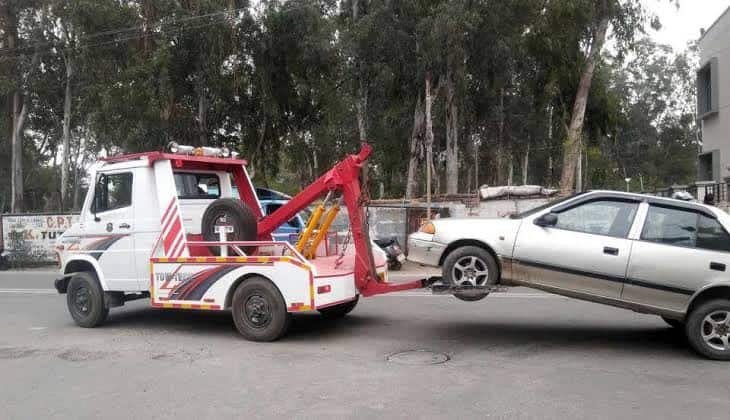
South Carolina’s Upstate has grown quickly, and the traffic on its interstates and commercial corridors has grown with it. Interstate 85 and Interstate 385 carry commuters, tourists and a heavy flow of freight tied to manufacturing plants and distribution centers, and crashes on those roads range from minor fender benders to collisions involving fully loaded tractor-trailers. What happens after a crash depends on a set of state rules that differ in important ways from the no-fault systems used in some other states. This article explains how fault, insurance and deadlines work in South Carolina car and truck crash claims.
An At-Fault State With Mandatory Uninsured Coverage

South Carolina is an at-fault state, which means the driver who caused a crash, and that driver’s insurer, is responsible for the resulting damages. Drivers must carry minimum liability coverage of $25,000 per person and $50,000 per accident for bodily injury, along with $25,000 for property damage. Uninsured motorist coverage at the same minimum levels is also mandatory, and insurers must offer underinsured motorist coverage, which drivers can accept or decline.
Injury firms in the Upstate, including Elliott Frazier Injury Law, LLC, deal with those coverage layers in nearly every auto claim, and the basic point is worth understanding early. A $25,000 bodily injury policy can be exhausted quickly by an emergency room visit, imaging and a few weeks of lost work. When the at-fault driver’s coverage runs out, the injured person’s own underinsured motorist coverage may become the main source of additional recovery, which makes reviewing the declarations page of every policy in the household an important early step.
Stacking and Multiple Policies
South Carolina law allows some insureds to stack underinsured or uninsured coverage from more than one vehicle policy in certain circumstances, particularly when the injured person was not occupying a vehicle they own or was covered under a household policy. The rules are technical and depend on policy language and the injured person’s status at the time of the crash. Even so, they can change the amount available in a serious case, and they are easy to overlook when a claim is handled without a close reading of every policy.
Property Damage and Rental Vehicles
Vehicle damage usually moves on a faster track than the injury claim. The at-fault driver’s property damage coverage pays for repairs or the fair market value of a totaled vehicle, and it may also cover a rental car for a reasonable period. Disputes often arise over the value of a totaled car, so records of recent maintenance, upgrades and comparable sales can support a higher figure. A vehicle that has been repaired may also have lost resale value, and South Carolina law allows claims for that diminished value in appropriate cases. Settling the property damage claim does not require settling the injury claim at the same time, and the two should be kept separate.
How Fault Affects Recovery
South Carolina follows a modified comparative negligence rule. An injured person can recover damages as long as his or her share of fault is not greater than the combined fault of the defendants, and the award is reduced by that percentage. A driver found 30 percent at fault in a $100,000 case would recover $70,000, while a driver found 51 percent at fault would recover nothing.
Insurers understand that threshold well. Adjusters often look for evidence that the injured driver was speeding, distracted or failed to yield, since shifting even a portion of fault reduces what the company pays and a larger shift can end the claim. Photographs of the scene, witness contact information, dash camera footage and the police report all help establish what actually happened. A south carolina car accident attorney reviewing a claim will usually start by examining that evidence before responding to any request for a recorded statement.
Joint and Several Liability
When more than one party caused a crash, South Carolina’s rules on joint and several liability can affect who pays. Under the state’s statute, a defendant whose conduct was responsible for less than 50 percent of the total fault is generally liable only for its own share of the damages, while a defendant at 50 percent or more can be responsible for the full amount. The rule has exceptions, including for defendants whose conduct involved drunk driving or intentional acts, and it plays a role in multi-vehicle and commercial crashes.
Why Truck Crashes Are Different
Collisions involving commercial trucks raise issues that ordinary car crashes do not. Interstate carriers must follow federal safety regulations on driver hours, vehicle inspections and maintenance, drug and alcohol testing and driver qualifications. Violations of those rules can support claims against the trucking company in addition to the driver. Federal law also requires interstate motor carriers to carry minimum financial responsibility, generally $750,000 for general freight and higher amounts for certain hazardous materials.
Truck crash evidence is often held by the carrier. Electronic logging device records, dispatch communications, maintenance files and the truck’s event data recorder can show speed, braking and hours on duty, and some of that data can be overwritten if it is not preserved. Regional information about these claims is available at elliottfrazierinjurylaw.com/greenville-truck-accident-lawyer, and the central step in any serious truck case is a prompt written demand that the carrier preserve its records.
Multiple Defendants in Commercial Cases
Truck crashes frequently involve several potentially responsible parties. The driver, the motor carrier, the owner of the trailer, a freight broker, a shipper that loaded the cargo and a maintenance company can each play a role. Every one of them may have separate insurance and separate lawyers, and identifying all of them early prevents a claim from being limited to a single policy that turns out to be inadequate.
Deadlines and Special Rules
South Carolina generally allows three years from the date of a crash to file a personal injury lawsuit. Claims against government entities, such as a city, county or the state Department of Transportation, fall under the South Carolina Tort Claims Act, which has its own deadlines, damage limits and notice procedures. A crash caused by a poorly maintained road or a government vehicle requires attention to those rules from the start.
Wrongful death claims follow their own structure. They are brought by the personal representative of the estate on behalf of the statutory beneficiaries, and a separate survival action can recover losses the person suffered before death. When a crash is fatal, the probate step of appointing a personal representative often has to happen before the claim can move forward.
Medical treatment deserves attention as well. Injuries such as concussions, herniated discs and soft tissue damage can take days or weeks to show their full effect, and gaps in treatment are one of the arguments insurers use most often to reduce a claim. Following through with care, keeping every bill and record, and noting how the injury affects work and daily life build the foundation of the claim.
Most crash claims in South Carolina settle without a trial. The ones that settle fairly tend to share the same features: complete medical records, preserved evidence and a clear understanding of every insurance policy that might apply.