This topic gets confusing fast because two separate systems govern it simultaneously, and they don’t always point in the same direction. One layer is state law, which varies enormously depending on where you’re shopping. The other layer is the private rulebook maintained by Visa and Mastercard themselves, which applies to any merchant accepting those networks regardless of what state law says. Debit card surcharges run into trouble from both directions at once, which is exactly why they’re treated so differently from credit card fees in practice.
Why Card Network Rules Matter Even Where State Law Stays Silent
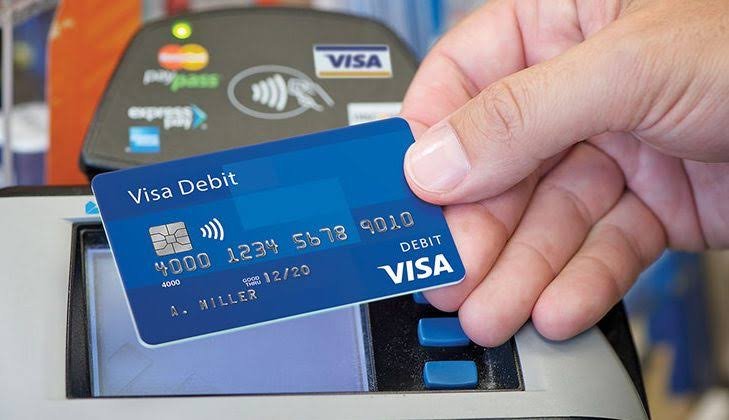
Here’s the part that surprises most people. Even in states with no specific law addressing debit card fees at all, Visa and Mastercard’s own merchant agreements prohibit surcharging a debit transaction, even when that debit card gets processed as a credit transaction at checkout. This isn’t a suggestion; it’s a binding contractual term every merchant agrees to the moment they sign up to accept these networks. So a business technically operating in a state with zero relevant legislation still can’t legally add a debit surcharge, because doing so violates the agreement that lets them accept the card in the first place.
Roughly Ten States Have Written Their Own Explicit Bans Too
On top of the card network restriction, around ten states maintain their own statutory bans specifically targeting debit card surcharges, treating the practice as an unfair consumer transaction rather than simply a contract violation between merchant and card network. California, New York, Texas, Florida, Connecticut, Kansas, Maine, and Massachusetts are commonly cited among the states actively enforcing bans of this kind. What makes these state-level bans meaningful in a way the card network rule alone isn’t is enforcement teeth; state attorneys general can investigate and prosecute violating merchants directly, and several states give consumers their own private right to sue for damages, treating a wrongful surcharge as a genuine consumer protection violation rather than a purely private dispute.
Why California’s Approach Shows What Real Teeth Look Like
California’s Civil Code Section 1748.1 gives the state clear statutory authority to pursue merchants who add surcharges to card transactions. Violations there can be pursued either directly by the California Attorney General or by an individual consumer suing under the state’s broader Unfair Competition Law. This dual enforcement path, government action plus private lawsuits, is precisely why California treats this issue with more practical weight than states relying purely on general consumer protection principles without a dedicated statute.
The Word That Actually Determines Whether a Fee Is Legal
Here’s the distinction that resolves most confusion at the register: surcharge versus convenience fee versus cash discount. A surcharge is an added cost specifically for using a card, and this is the category running into the restrictions described above. A convenience fee is a flat charge for using a non-standard payment method, paying by phone or online when a business primarily operates in person, and it functions under somewhat different rules; notably, card networks don’t allow a merchant to apply both a surcharge and a convenience fee to the same transaction. A cash discount program works entirely differently and sidesteps most of this restriction altogether; the advertised price already reflects card processing costs, and customers who pay cash simply receive a reduction off that baseline price. Cash discounting is legal in all fifty states, which is exactly why so many gas stations and convenience stores rely on this model instead of a straightforward surcharge.
Why the Durbin Amendment Actually Made Fees More Flexible, Not Less
It’s worth clearing up a common misconception here. Federal law doesn’t ban debit card fees outright; if anything, the 2010 Dodd-Frank Act’s Durbin Amendment created more flexibility around processing costs generally, by capping the interchange fees banks could charge merchants for debit transactions. The restriction on debit surcharges specifically comes from card network policy and individual state statutes, not from a standalone federal prohibition targeting debit fees themselves.
What the Actual Cap Looks Like When Surcharging Is Permitted at All
For the categories of fees that are permitted, mainly credit card surcharges in states that allow them, card network rules cap the surcharge at 3% for Visa and 4% for Mastercard, but with an additional, tighter restriction layered on top: the surcharge can never exceed the merchant’s actual cost of accepting that card, regardless of what the network cap technically allows. Some states impose their own lower caps on top of this; Colorado limits surcharges to 2%, and Minnesota caps them at 5% while requiring clear disclosure to customers.
Why Moving Between States Changes Your Protections Overnight
Since this entire area of law is genuinely a patchwork rather than a uniform national standard, a fee that would be flatly illegal in California can become perfectly legal the moment you cross into a state without an equivalent restriction. This matters practically for anyone running a business across multiple states, or even just for consumers trying to figure out whether a fee they were charged while traveling was actually legitimate, since the honest answer depends entirely on exactly which state that specific transaction happened in.
What to Actually Do If You Spot an Illegal Debit Fee
If you believe a merchant charged you an improper debit card surcharge, keeping your receipt is the single most useful thing you can do, since it serves as direct proof of both the purchase and the specific fee applied. From there, your options typically include reporting the issue to your state’s attorney general consumer protection division, and in states with a private right of action, potentially pursuing the matter directly through small claims court, since some of these statutes specifically allow consumers to recover damages rather than relying solely on government enforcement.
FAQs
Q1. If a store charges the exact same fee whether I use a credit or debit card, is that automatically illegal?
Not necessarily on its own, since this could reflect a legitimate convenience fee applied to all card types rather than a debit-specific surcharge, though if it’s specifically labeled as a card surcharge and includes debit transactions in a state or under card network rules that prohibit that, it likely violates the rules.
Q2. Does it matter if the merchant discloses the debit fee clearly before I pay?
Disclosure generally matters for credit card surcharges where they’re otherwise permitted, but it doesn’t cure an outright debit surcharge ban, since disclosure addresses transparency requirements, not whether the underlying fee type is allowed at all in that state or under network rules.
Q3. Can a business legally charge more for a debit card transaction if they call it something other than a “surcharge”?
Not automatically, since regulators and card networks generally look at the substance of the fee rather than just its label, meaning renaming a prohibited debit surcharge doesn’t necessarily make it compliant if it functions the same way in practice.
Q4. If I’m charged an illegal debit fee while traveling in a different state than where I live, which state’s law applies?
Generally the law of the state where the transaction actually took place applies, since these are location-based consumer protection statutes, meaning your home state’s rules don’t travel with you the way some other legal protections might.