There’s a common assumption that some federal standard dictates exactly how many mirrors your car needs while you’re driving. That’s only half true. Federal guidelines do require new vehicles to be manufactured with a rearview mirror and side mirrors, but those requirements target manufacturers building the car, not drivers operating one that’s already on the road. Once your car rolls off the lot, whether you’re legally allowed to keep driving it with a broken or missing mirror is governed entirely by your state’s own vehicle code, not by anything federal.
Why Two Mirrors Is the Common Baseline, Not Three
Most states set their requirement around having at least two functioning mirrors that together give you a rear view of traffic, and critically, this doesn’t necessarily mean two side mirrors specifically. In many states, your interior rearview mirror counts as one of those two, meaning a car with a working interior mirror plus one intact side mirror, typically the driver’s side, satisfies the legal minimum even with the passenger side mirror completely missing.
Why the Driver’s Side Mirror Gets Treated Far More Seriously
This is the detail that actually determines most real-world enforcement outcomes. If your driver’s side mirror is gone or hanging loose, you’re genuinely likely to get pulled over, since officers focus heavily on that specific mirror and your overall rear visibility. The passenger side mirror carries meaningfully less enforcement risk in most states; it’s often treated as optional as long as your driver’s side mirror and interior mirror remain functional. That said, if your rear window happens to be blocked, whether by cargo, tint, or vehicle design, that missing passenger mirror stops being a low-priority issue and becomes a genuine violation, since you’d have no remaining way to see behind you on that side at all.
Why California Requires More Than the Bare Minimum
California takes a stricter approach than many states through Vehicle Code Section 26709, which requires every vehicle to have at least two mirrors providing a rear view, and separately mandates exterior mirrors on both sides specifically when the interior rearview mirror’s view is obstructed. This creates a layered requirement rather than a single flat rule; a clear interior mirror might satisfy the basic two-mirror requirement on its own, but the moment that interior view gets blocked, California’s law specifically triggers the need for genuine exterior mirrors on both sides.
Why Pennsylvania and New York Sit at the Stricter End
Some states go further still. Pennsylvania requires mirrors on both sides specifically for vehicles manufactured after 1968, effectively making dual side mirrors mandatory for the overwhelming majority of cars actually on the road today. New York’s vehicle code has been interpreted to require all factory-installed mirrors to remain functional, meaning if your car came from the factory with two side mirrors, both are expected to work, rather than the state simply requiring some minimum baseline regardless of original equipment.
What “Broken” Actually Means Under These Laws
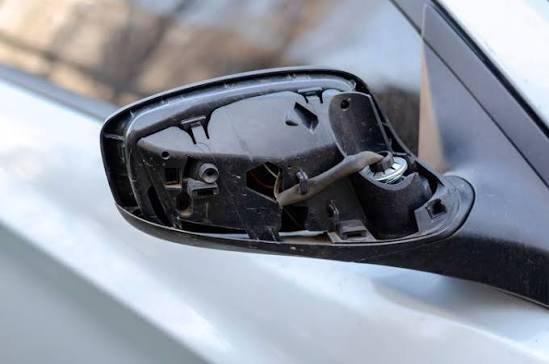
This distinction matters more than people expect. A mirror with a genuinely cracked or spider-webbed surface that still reflects a usable image is treated very differently from a mirror that’s dangling, detached, or missing outright. Most states apply their broken-mirror rules based on function, not cosmetic condition; if the mirror still gives you a workable rear view despite visible damage, it typically doesn’t trigger the same violation that a completely non-functional or absent mirror would.
What Actually Happens During a Traffic Stop
A damaged or missing mirror gives an officer legitimate grounds to initiate a stop in every state, since it’s generally treated as an equipment violation officers can act on directly. That said, the actual consequence tends to be modest for a first encounter; many jurisdictions issue what’s informally called a “fix-it” ticket, essentially a citation that gets dismissed once you provide proof the mirror has been repaired within a set window. Straightforward fines where no fix-it option applies tend to run relatively low, commonly in the range of $30 to over $200 depending on the specific state and circumstances involved.
Why This Becomes a Much Bigger Problem After an Accident
The real financial risk here rarely comes from the citation itself; it comes from what happens if you’re ever in a collision while driving with a compromised mirror. If you’re found at fault for an accident and your missing or broken mirror is shown to have contributed to reduced visibility, that detail can meaningfully strengthen the case against you in a liability dispute, potentially shifting how a court or insurance adjuster assigns fault. A missing mirror can also cause your vehicle to fail a state safety inspection outright, in states that require periodic inspections, blocking your ability to renew registration until it’s repaired.
Why Commercial Vehicles Play by an Entirely Different Rulebook
It’s worth knowing that commercial vehicles and trucks generally face separate, often stricter mirror requirements than standard passenger cars, reflecting the different visibility challenges and safety stakes involved in operating larger vehicles. A rideshare or delivery driver using a personal vehicle for commercial purposes should specifically check whether their state or the platform they work for imposes additional mirror or vehicle condition standards beyond what applies to an ordinary passenger car.
FAQs
Q1. If my interior rearview mirror works perfectly, does that mean I’m automatically fine with both side mirrors missing?
Not necessarily, since this depends entirely on your specific state’s requirements; some states accept an interior mirror plus one side mirror as sufficient, while others, like Pennsylvania and New York, specifically require both side mirrors regardless of interior mirror function.
Q2. Will a cracked side mirror that still reflects an image get me the same citation as one that’s completely broken off?
Generally no, since most states focus on whether the mirror still provides a functional rear view rather than its cosmetic condition, meaning a cracked but usable mirror is typically treated far more leniently than one that’s detached or missing entirely.
Q3. Does driving with a missing mirror automatically make me at fault if I’m in an accident involving that side of my car?
Not automatically, but it can meaningfully strengthen an argument that reduced visibility contributed to the collision, which may influence how fault gets assigned during a liability dispute or insurance claim.
Q4. If I get a citation for a broken mirror, is there usually a way to avoid the fine entirely?
Often yes, many jurisdictions offer what’s called a fix-it ticket, allowing the citation to be dismissed if you repair the mirror and provide proof of the fix within a specified deadline, rather than requiring immediate payment of a standard fine.