By Marcus J. Michles II
I started my legal career in a courtroom most civilian lawyers never see. As a captain in the U.S. Army, I served with the 82nd Airborne Division, the Third Special Forces Group and the First Special Operations Command, and I spent part of that time as lead trial counsel in sensitive and classified cases for the government. After leaving active duty, I went to work defending physicians in medical negligence suits and eventually managed the Pensacola office of a statewide defense firm. In 1993 I switched sides. I spent eight years representing injured plaintiffs at Kerrigan, Estess, Rankin & McLeod, and in 2001 I founded the practice that became Michles & Booth, where I still serve as managing partner.
Those years on both sides of injury litigation shape how I look at bicycle crash cases along the Emerald Coast. Knowing how the defense builds its argument is one of the most practical ways to protect an injured rider, and the rules that govern these claims in Florida have changed a great deal in the past few years.
The Defense Playbook Starts Early
Defense work in medical negligence cases centers on the patient’s own contribution to the outcome. Insurers handling a bicycle crash take the same approach, and they often begin before the rider has left the hospital. An adjuster may call with friendly questions about speed and lighting and ask to record the conversation. A recorded statement given in the first days after a crash, while the rider is in pain and on medication, can resurface months later during negotiations or at trial.
Florida raised the stakes in 2023. House Bill 837 moved the state to modified comparative negligence, so an injured person found more than 50 percent at fault now recovers nothing. Before that change, a cyclist who was 60 percent responsible could still collect 40 percent of the damages. Today that same finding ends the case. The same law also cut the deadline for most negligence claims from four years to two for causes of action that accrued after March 24, 2023, which leaves far less room for a rider to wait and see how recovery goes.
Here’s the kicker, though. Fault arguments in bike cases rarely rest on dramatic facts. They rest on small ones, such as a missing rear light at dusk or earbuds in both ears. Florida law requires a bicycle ridden between sunset and sunrise to carry a front lamp showing white light visible from at least 500 feet, along with a rear lamp and reflector showing red light visible from 600 feet. Defense lawyers look for that detail in the police report early on.
What the Bicycle Itself Can Prove
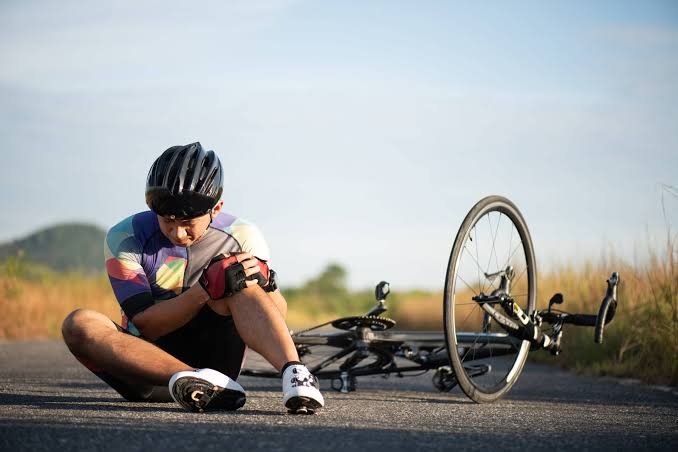
Funny thing is, the bicycle often tells the clearest story in the file. The location of a bent fork or a scraped pedal shows the angle of impact, and a cracked rear light housing can settle the lighting question in a sentence. Families sometimes take a damaged bike to a shop for repair within days of the crash, and that evidence disappears for good. Leaving the bike untouched and photographing it from every side, together with the helmet and the clothing worn that day, preserves a record that no witness can replace.
Florida’s three-foot passing rule gives cyclists real protection on paper. Section 316.083 of the Florida Statutes requires a driver overtaking a bicycle in the same lane or in a bicycle lane to pass at a distance of not less than three feet. Proving a violation is harder, because the driver almost always says there was plenty of room. Doorbell cameras and gas station video can fill that gap, yet much of that footage is overwritten within weeks. A written request asking a nearby business to preserve its recordings costs almost nothing and does the most good in the first days after a crash.
Insurance Coverage Riders Overlook
Florida remains a no-fault state, and personal injury protection coverage reaches further than many cyclists realize. The Florida Bar notes that pedestrians and bicyclists are entitled to PIP benefits, and a rider who owns a car will often look first to that car’s policy. PIP pays up to $10,000, covering 80 percent of reasonable medical expenses and 60 percent of lost wages. It also carries a strict condition: initial care must happen within 14 days of the crash, or the medical benefits are lost. Riders who wait for the soreness to pass can forfeit that coverage entirely.
Uninsured motorist coverage on the rider’s own auto policy may also apply when the driver carries little or no bodily injury insurance. That situation comes up often in Florida, because the state requires vehicle owners to carry PIP and property damage liability but not bodily injury liability coverage in order to register a car. Declarations pages for every auto policy in the household are worth reviewing, since coverage sometimes turns up on a spouse’s or parent’s policy that no one thought to check.
Different Communities Across the Panhandle
Michles & Booth has offices in Pensacola, Fort Walton Beach and Crestview. Fort Walton Beach sits on the coast in south Okaloosa County, and Crestview is the county seat inland to the north, with Eglin Air Force Base between them and Hurlburt Field just west of Fort Walton Beach. Residents of north Okaloosa County can find the local office at michlesbooth.com/crestview-personal-injury-lawyers, though the rules described here apply there the same way they apply anywhere else in the state.
Speaking of which, the military community shapes a number of these cases. Active-duty riders and their families often receive treatment through TRICARE, and federal law allows the government to seek reimbursement for the cost of that care from a settlement or verdict. The claim does not go away on its own. Accounting for it at the start of a case keeps it from becoming an unpleasant surprise when the money is finally divided.
What Four Decades in Courtrooms Taught Me About Preparation
I studied political science at Furman University, with foreign study at Oxford and in London. Law school came next at Stetson University College of Law, where I chaired the Moot Court Board and graduated in 1986. The Florida Bar admitted me that same year and board certified me in civil trial practice in 2001. I’m admitted in the Northern and Middle District federal courts of Florida and belong to the American Inns of Court and the Million Dollar Advocates Forum. Over the years, more than a dozen of my verdicts have been reported in local news media.
Credentials aside, bicycle cases tend to turn on consistency and timing. An injured person’s account that shifts between the first interview and a deposition gives the defense an opening, and a careful early walkthrough of the crash, street by street, helps close it. Speaking with a bicycle accident lawyer fort walton beach within the first weeks after a crash also leaves time to request video before it is overwritten and to document the bike before any repair.
Outside the office, my wife, Cindy, and I founded the Michles Family Freedom Foundation, a charitable organization based in Fort Walton Beach. Its mission is to provide financial assistance, in the form of money and professional services (legal, accounting and financial advice), directly to the families of military members, law enforcement officers and first responders killed or seriously injured in the line of duty.
Most cyclists hurt in a crash never planned to think about any of this. They were riding to work or taking a Saturday loop along the water, and a driver looked the wrong way at the wrong moment. Florida law still gives them a fair chance at recovery, provided the facts get gathered early and their account stays consistent from the first phone call to the last day in court.