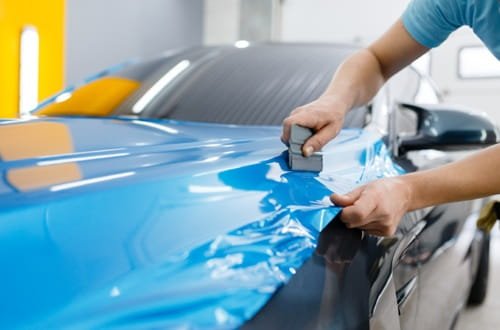
Car wrapping – applying a vinyl film to a vehicle’s exterior to change its colour or appearance – is perfectly legal in India. It is a legitimate way to personalise your vehicle, protect the original paint, and experiment with different looks without permanent changes. However, the legality comes with specific conditions: if the wrap changes the vehicle’s colour from what is registered in the RC (Registration Certificate), you must follow the RTO colour change process – just as you would for a repaint. Ignoring this process can result in fines, RC suspension, and insurance complications.
Why Colour Changes Require RTO Approval
Under Section 52 of the Motor Vehicles Act, 1988 and CMVR Rule 47, the colour of a vehicle is part of its registered specification. Your RC book specifies the vehicle’s registered colour. Any change to this colour – whether through repainting or vinyl wrapping – constitutes an “alteration” under the MVA. The registration authority (RTO) must be notified and the RC updated to reflect the new colour.
This requirement exists for practical law enforcement reasons: vehicle colour is a primary identification tool for police, insurance companies, traffic authorities, and crime investigation. A mismatch between the vehicle’s actual colour and its registered colour creates identification problems, can facilitate vehicle disguise after crimes, and complicates insurance verification.
When Car Wrapping Does and Does Not Require RTO Notification
Wrapping requires RTO approval and RC update when: the wrap changes the vehicle’s colour from the colour registered in the RC (e.g., white car wrapped in matte black); the wrap covers a significant portion of the vehicle and changes its appearance substantially (most guidelines suggest 50%+ coverage triggers the requirement); or the wrap involves adding graphics, commercial advertising, or brand imagery not mentioned in the RC.
Wrapping may not require RC update when: the wrap exactly matches the vehicle’s registered colour (same shade, just different finish – e.g., from gloss white to satin white, though some RTOs still require notification); partial decorative wraps covering minor areas (small accents, roof wrap in the same colour family); or Paint Protection Film (PPF) that is transparent and does not change colour.
The RTO Colour Change Process for Car Wrapping
Obtain pre-modification approval from your RTO using the NAMV (Notice for Alterations in Motor Vehicles) form or the appropriate state equivalent, specifying the new colour shade precisely (use standard automotive colour names, not vague descriptions). Submit with: original RC, insurance certificate, PUC certificate, owner ID proof, the new colour sample, and applicable fee (typically Rs 300-800 plus any state-specific charges).
Once approved, apply the wrap at a professional workshop. Then visit the RTO for a post-modification inspection. Submit Form 22E (or equivalent) to update your RC. The entire process typically takes 2-14 days depending on RTO workload. After RC update, inform your insurance company of the colour change to ensure your policy reflects the vehicle’s current appearance.
Practically, many car owners skip the RTO notification for wraps, relying on the removable nature of vinyl (arguing it’s not a permanent change). This is a legal risk: during traffic enforcement checks, if your car’s colour doesn’t match the RC, you face potential fines and the wrap may be ordered removed.
Prohibited Wrap Colours and Designs
Certain colours and designs are specifically prohibited for private vehicles. Army olive green and military camouflage patterns are reserved for military vehicles only and are illegal on private cars. Police-style blue and white patterns that could be mistaken for official police vehicles are prohibited. Ambulance red and yellow patterns are restricted. Chrome and highly reflective wraps that cause dangerous glare to oncoming drivers may be restricted by some RTOs and could attract challans for causing road hazards.
Additionally, wraps promoting illegal activities, containing obscene imagery, or displaying political content that violates Electoral Commission guidelines during elections may be restricted under respective laws. Number plate areas, chassis number areas, and safety-label areas must remain unobscured by the wrap.
Insurance Implications
Always inform your insurer about a car wrap. Your insurance policy covers the vehicle’s value as described in the policy, tied to the RC. If your car is involved in an accident or theft and the colour does not match the RC and insurance policy records, the insurer has grounds to dispute the claim. Most comprehensive policies require disclosure of modifications. Some premium car wraps – especially full wraps with expensive custom designs – may add to the vehicle’s value and should be listed as additional cover. The wrap itself (if damaged in an accident) is generally not covered unless specifically included in your policy.
Final Thought
Car wrapping is legal and popular in India, with a growing professional wrapping industry in metro cities. The key compliance requirements are: notify your RTO if the wrap changes your registered colour; update your RC to reflect the new colour; avoid prohibited colours (military green, camouflage, police-style); do not obscure number plates or chassis numbers; and inform your insurer. A professionally applied wrap that follows these rules gives you a stunning custom look, protects the original paint, and remains fully road-legal. The removability of vinyl is an advantage over paint but does not exempt you from the colour change notification requirement.
Frequently Asked Questions (FAQs)
Q1. Do I need permission to wrap my car in a different colour?
Yes. If the wrap changes your vehicle’s colour from what is registered in your RC, you need RTO approval and RC update – the same process as for a paint-based colour change. Submit the NAMV form to your RTO before wrapping, get approval, apply the wrap, have the RTO inspect, and update your RC. The fee is typically Rs 300-800 for RTO endorsement. The process takes 2-14 days. Wrapping without updating the RC creates a mismatch between your car’s appearance and its legal records, attracting potential fines and insurance complications.
Q2. Can I wrap my car in matte black or any colour I like?
Yes, with very limited exceptions. You can wrap your car in virtually any colour – matte black, satin white, chrome, candy red, or any other – as long as: it is not army olive green or military camouflage (reserved for armed forces); it does not mimic police or emergency service vehicle colours; it does not use highly reflective chrome finishes that cause dangerous glare; you follow the RTO colour change process; and you update your RC and insurance. Matte black wraps are among the most popular in India and are fully legal with proper RTO notification.
Q3. How long does a car wrap last and is it reversible?
Professional-grade vinyl wraps typically last 3-7 years depending on the quality of the film and Indian weather conditions (UV exposure, heat, and humidity affect longevity). A properly applied wrap can be removed by professionals without damaging the original paint – in fact, the wrap protects the original paint from scratches, stone chips, and minor abrasions. When you remove the wrap, the original paint is revealed in its pre-wrap condition. This is a key advantage over paint: you can revert to the original colour without costly repainting, though you must again update your RC with the original colour.
Q4. Can wrapping my car affect my insurance?
Yes, failing to inform your insurer about a colour change wrap can affect claims. Insurance policies are linked to the RC’s registered colour. If your car is stolen or damaged and the colour doesn’t match the RC and insurance records, the insurer can dispute the claim. Always inform your insurer after wrapping. Regarding premiums: the wrap itself typically does not change your premium as it doesn’t affect driving risk. However, the wrap has a value (wraps can cost Rs 15,000-1.5 lakh+) and that value is not covered under standard policies unless you specifically request it as an add-on.
Q5. Can I advertise on my car through a wrap?
Commercial advertising wraps on private vehicles are legal in most states, but may require: RTO notification if the wrap changes the vehicle colour or appearance registered in the RC; compliance with local municipal corporation rules about advertising in public spaces; and for commercial vehicles used for advertising, specific permits in some states. Never allow the advertising to obscure number plates, windshields beyond visibility limits, or safety labels. For corporate fleet advertising (company vehicles with brand wraps), follow your company’s vehicle policy and the RTO process for the relevant state.